Octavia Spencer Quotes
The misperception about the South is that everybody is racist, and all black people are victims, that what was prevalent in the '60s is only relegated to the South.
Spencer, Octavia. Interview. The Grio, 2012.

Reconstruction was the period in the South after the Civil War. The change that emancipation brought to the white South was traumatic, and there was a constant struggle between those who wanted the Blacks to be integrated into Southern Society—and those Southerners who wanted to create a society that would be as close to slavery as possible, So the Klu Klux Klan and other terrorist organizations formed and with lynching and other intimidation, much of the initial progress of Reconstruction was rolled back and did not get reinstated until the Civil Rights and Voting Rights Acts were passed in 1964.

This quotation shows two important historical facts about Southern Racism. The first is now great the social pressures were against any white who would try and alter the status quo. The second was that none the less there have always been whites in the South who, despite the great social penalties, did the right thing and not only improved the situation, but more important, made most Americans realize that Southerners were not all racists any more than all of any group had any negative behavior.


This was art of the Nixon "Southern Strategy" to alienate the white supremacists and racists from the Democratic Party with Civil Rights legislation and rhetoric, and get most of them to become Republicans. But as Phillips observed, when Negroes began voting in significant numbers in the South the party switching really accelerated.


The all white regular Mississippi Delegation was selected in elections where Blacks were barred from voting although Blacks were in the majority in Mississippi. In addition, the regular party was advocating obstructing the Supreme Court school integration decisions and the Civil Rights Act that had just been passed. See {637616}. The insurgent group was selected in integrated elections, contained black and white delegates, and was pledged to support and obey the laws. The President could not make the decision unilaterally, but had a great deal of influence.


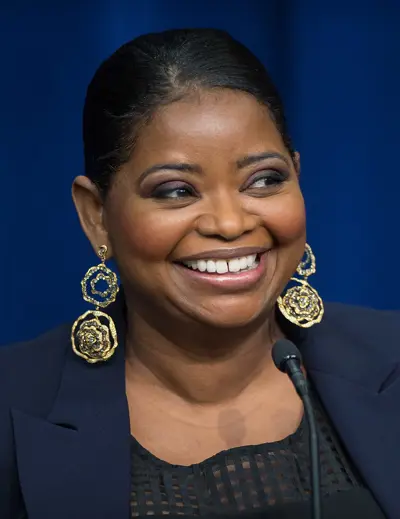
Octavia Lenora Spencer is an American actress, author, and producer. She is the recipient of several accolades, including an Academy Award, a Golden Globe Award, and three Screen Actors Guild Awards. She is one of two women of color to have received three Oscar nominations and the first black actress to receive two consecutive nominations.
