Julian Bond Quotes
I never rode a bus because I knew I would have to sit in the back.
Julian Bond, 1940-1975, U. S. Congressman (Democrat, GA), Chairman, NAACP, Reflection on his boyhood in the segregated South, The History Channel, The Century: America’s Time: The Civil Rights Movement, May 20, 2001
Sourced by: Eigen's Political and Historical Quotations


Reconstruction was the period in the South after the Civil War. The change that emancipation brought to the white South was traumatic, and there was a constant struggle between those who wanted the Blacks to be integrated into Southern Society—and those Southerners who wanted to create a society that would be as close to slavery as possible, So the Klu Klux Klan and other terrorist organizations formed and with lynching and other intimidation, much of the initial progress of Reconstruction was rolled back and did not get reinstated until the Civil Rights and Voting Rights Acts were passed in 1964.

Blacks were fighting and dying in WWII. They were equal when they were under fire, but otherwise not. The war was against fascist protagonists whose creed was inequality while the allies were upholding freedom and equality. But making that aspiration a reality was difficult.


Buckley’s mother, the entertainer Lena Horn, refused to entertain at an American base where white GIs sat in the front, the German prisoners of war in the middle and the black GIs in the back. This was typical of prisoner of war facilities throughout the South.

The statement was made even more dramatic as the outgoing Governor, Lester Mattox, standing behind Carter at the ceremony, was an arch segregationist.


This widely publicized statement by Mr. Ethridge was made when he was a member of the President's Committee on Fair Employment Practices during the hearings of this Committee at Birmingham, Alabama.


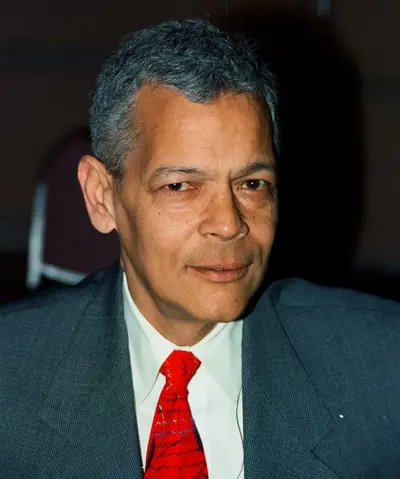
Horace Julian Bond was an American social activist, leader of the civil rights movement, politician, professor, and writer. While he was a student at Morehouse College in Atlanta, Georgia, during the early 1960s, he helped establish the Student Nonviolent Coordinating Committee (SNCC). In 1971, he helped found the Southern Poverty Law Center in Montgomery, Alabama, and served as its first president for nearly a decade.
