Bernhard von Bulow Quotes
It was both necessary and desirable for us to be so strong at sea that no Sea Power could attack us without risk, so that we might be free to protect our oversea interests, independently of the influence and the choice of other Sea Powers.
Bülow, Bernhard von. Imperial Germany. Translated by Marie A. Lewenz, Dodd, Mead and Company, 1914, p. 31.


This quotation illustrates several historical differences of the past with today. To be a world superpower, one had to have a dominant navy. Yet that navy was, in Churchill’s concept, a defensive system. It could protect the nation from invasion, and its merchant ships on the seas, but a navy provided no threat to invade towns and villages in Europe or elsewhere. Germany and France in contrast, with their large armies could invade other nations and menace Europe and Asia. It also illustrates why the navy and the army were considered completely separate departments of government in that they had different functions. The early American government had a Navy Department and Secretary but no Secretary of the Army or standing army.

Germany had a very small and insignificant navy. It was Tirpitz who persuaded the nation to develop sea power.


He was referring to attacking the Barbary States. The Barbary Pirates had an incredible extortion racket going in the Mediterranean. If nations would pay them an annual sum each year, they would not attack and seize merchant ships of that country and sell the ships and goods while holding the sailors for ransom. See {640846}.


There were few military thinkers at that time who would agree with Goebbels on this point.


Military men tend to rely so much on military history that they are almost always fighting the last war. Soon air power would supplant sea power as the critical factor. Then nuclear power, and then nuclear weapons became too severe for actual use and yet wars still continued with no consensus as to that will be in the future.


Germany had world power aspirations before Adolf Hitler.

This quotation illustrates some of the interesting attitudes of early Americans. First, note the backhanded slap at a standing army. The navy was much preferred by early Americans as history had demonstrated that most republics had been destroyed by their own armies taking over in some “emergency” of time of “crisis.” This also helps explain why the army and navy were different departments of government—a tradition that lasted until after WWII. The two departments had totally different purposes and objectives and presented different potential dangers to the nation.

America’s oldest foreign policy problem has been freedom of the seas for American shipping. Since the end of WWII, the U. S. however performed this function—and pays for it—for the entire world with some minor exceptions.


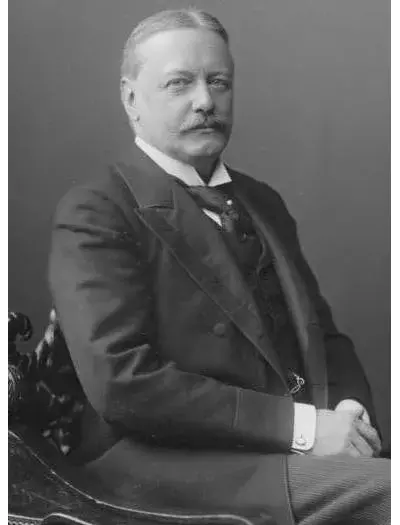
Bernhard Heinrich Karl Martin von Bülow, created Fürst von Bülow in 1905, was a German statesman who served as Foreign Minister for three years and then as Chancellor of the German Empire from 1900 to 1909. A fervent supporter of Weltpolitik, Bülow single-mindedly devoted his chancellorship to making Germany a leading power on the world stage. Despite presiding over sustained economic growth and technological advancement within his country, his government's foreign policy did much to antagonize the international community and significantly contributed to the outbreak of the First World War.
