John Paul Jones Quotes
When the enemies' land force is once conquered and expelled from the continent, our Marine will rise as if by enchantment and become, within the memory of persons now living, the wonder and envy of the world.
Jones, John Paul. Life and Correspondence of John Paul Jones. Edited by Robert Charles Sands, D. Fanshaw, 1830, p. 290.


This quotation illustrates several historical differences of the past with today. To be a world superpower, one had to have a dominant navy. Yet that navy was, in Churchill’s concept, a defensive system. It could protect the nation from invasion, and its merchant ships on the seas, but a navy provided no threat to invade towns and villages in Europe or elsewhere. Germany and France in contrast, with their large armies could invade other nations and menace Europe and Asia. It also illustrates why the navy and the army were considered completely separate departments of government in that they had different functions. The early American government had a Navy Department and Secretary but no Secretary of the Army or standing army.

Germany had a very small and insignificant navy. It was Tirpitz who persuaded the nation to develop sea power.


The German naval command—without the permission of the Kaiser—at the eve of a losing war decided that the entire German navy would make a grand attack against the far superior English fleet. It was to be a virtual suicide attack on a grand scale. However, most German sailors heard about the plan and refused orders to attack in what was the largest mutiny in history. The German naval leaders then took the fleet out to sea and scuttled all the ships so that the English would not capture them. The result was the same but tens of thousands of lives were saved; many German officers felt that German naval honor had been lost.

Military men tend to rely so much on military history that they are almost always fighting the last war. Soon air power would supplant sea power as the critical factor. Then nuclear power, and then nuclear weapons became too severe for actual use and yet wars still continued with no consensus as to that will be in the future.


There were few military thinkers at that time who would agree with Goebbels on this point.


He was referring to attacking the Barbary States. The Barbary Pirates had an incredible extortion racket going in the Mediterranean. If nations would pay them an annual sum each year, they would not attack and seize merchant ships of that country and sell the ships and goods while holding the sailors for ransom. See {640846}.

In the first year of WWI, the British Fleet kept the German Fleet bottled up in port. As a result, the British had a very successful sea embargo against the Germans who rarely challenged the British fleet even though they had some major, powerful, capital ships. See {642234}. Meanwhile, the German ships were in no position to harass much less destroy Allied (French, Russian or English) shipping.


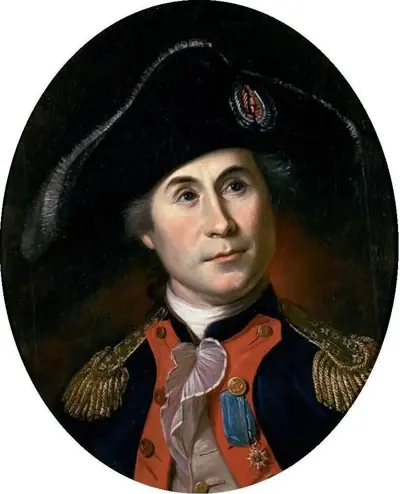
John Paul Jones was the United States' first well-known naval commander in the American Revolutionary War. He made many friends among U.S political elites (including John Hancock and Benjamin Franklin), as well as enemies (who accused him of piracy), and his actions in British waters during the Revolution earned him an international reputation which persists to this day. As such, he is sometimes referred to as the "Father of the American Navy" (a sobriquet he shares with John Barry and John Adams).
