Thomas Campbell Quotes
With Freedom's lion-banner Britannia rules the waves.
Thomas Campbell, 1777-1844, Scottish Poet, Ode to the Germans
Sourced by: Eigen's Political and Historical Quotations

This quotation illustrates several historical differences of the past with today. To be a world superpower, one had to have a dominant navy. Yet that navy was, in Churchill’s concept, a defensive system. It could protect the nation from invasion, and its merchant ships on the seas, but a navy provided no threat to invade towns and villages in Europe or elsewhere. Germany and France in contrast, with their large armies could invade other nations and menace Europe and Asia. It also illustrates why the navy and the army were considered completely separate departments of government in that they had different functions. The early American government had a Navy Department and Secretary but no Secretary of the Army or standing army.


Germany had a very small and insignificant navy. It was Tirpitz who persuaded the nation to develop sea power.


Political disputes over the degree of defense spending are classic in American political history. In the early 20th century, most conservatives were opposed to government spending for the military and the President had great difficulty getting the Conservative wing of his own party to support increased military appropriations. The remains of the great naval hero John Paul Jones had just been brought to the United States from France in which he had died. A large ceremony was held in Annapolis, Maryland and most of the conservatives who had opposed the military spending proposed by Roosevelt attended the ceremony to demonstrate their patriotism. TR shocked them by turning the solemn ceremony into a political embarrassment for them.


This article reached America where the insult proved a patriotic rallying point.


Frederick the Great. He and many other Europeans thought that England had been so preoccupied with the American rebellion that she was ignoring Europe and other traditional foreign policy interests of theirs.

He was referring to attacking the Barbary States. The Barbary Pirates had an incredible extortion racket going in the Mediterranean. If nations would pay them an annual sum each year, they would not attack and seize merchant ships of that country and sell the ships and goods while holding the sailors for ransom. See {640846}.


The German naval command—without the permission of the Kaiser—at the eve of a losing war decided that the entire German navy would make a grand attack against the far superior English fleet. It was to be a virtual suicide attack on a grand scale. However, most German sailors heard about the plan and refused orders to attack in what was the largest mutiny in history. The German naval leaders then took the fleet out to sea and scuttled all the ships so that the English would not capture them. The result was the same but tens of thousands of lives were saved; many German officers felt that German naval honor had been lost.

America’s oldest foreign policy problem has been freedom of the seas for American shipping. Since the end of WWII, the U. S. however performed this function—and pays for it—for the entire world with some minor exceptions.

See {629350} for his reason that we had to have a strong navy.


Germany had world power aspirations before Adolf Hitler.

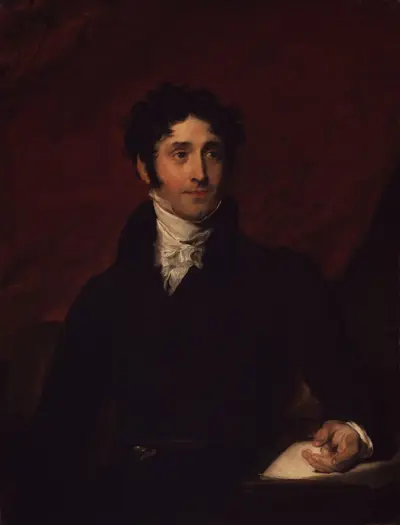
Thomas Campbell was a Scottish poet. He was a founder and the first President of the Clarence Club and a co-founder of the Literary Association of the Friends of Poland; he was also one of the initiators of a plan to found what became University College London. In 1799 he wrote "The Pleasures of Hope", a traditional 18th-century didactic poem in heroic couplets. He also produced several patriotic war songs—"Ye Mariners of England", "The Soldier's Dream", "Hohenlinden" and, in 1801, "The Battle of the Baltic".
