Alfred Thayer Mahan Quotes
We have not the navy, and, what is worse, we are not willing to have the navy, that will weigh seriously in any disputes with those nations whose interests will there conflict with our own.
See {629350} for his reason that we had to have a strong navy.
Alfred Thayer Mahan, 1840-1914, U. S. Navy Admiral & writer on naval affairs, “The United States Looking Outward”, The Atlantic Monthly, December 1890
Sourced by: Eigen's Political and Historical Quotations


He was referring to attacking the Barbary States. The Barbary Pirates had an incredible extortion racket going in the Mediterranean. If nations would pay them an annual sum each year, they would not attack and seize merchant ships of that country and sell the ships and goods while holding the sailors for ransom. See {640846}.


Political disputes over the degree of defense spending are classic in American political history. In the early 20th century, most conservatives were opposed to government spending for the military and the President had great difficulty getting the Conservative wing of his own party to support increased military appropriations. The remains of the great naval hero John Paul Jones had just been brought to the United States from France in which he had died. A large ceremony was held in Annapolis, Maryland and most of the conservatives who had opposed the military spending proposed by Roosevelt attended the ceremony to demonstrate their patriotism. TR shocked them by turning the solemn ceremony into a political embarrassment for them.

This historical quotation is important for two reasons, First, it shows us that the concept of a Canal was discussed fully a decade before Theodore Roosevelt actually had it built. Second, there were those who feared that a canal would actually be a detriment to the United States as our Navy was then quite weak. TR however built up the navy and made a great world-wide show of it and also built the Panama Canal.


This quotation illustrates several historical differences of the past with today. To be a world superpower, one had to have a dominant navy. Yet that navy was, in Churchill’s concept, a defensive system. It could protect the nation from invasion, and its merchant ships on the seas, but a navy provided no threat to invade towns and villages in Europe or elsewhere. Germany and France in contrast, with their large armies could invade other nations and menace Europe and Asia. It also illustrates why the navy and the army were considered completely separate departments of government in that they had different functions. The early American government had a Navy Department and Secretary but no Secretary of the Army or standing army.

He didn’t succeed until Mahan wrote his marvelous treatise.

This quotation illustrates some of the interesting attitudes of early Americans. First, note the backhanded slap at a standing army. The navy was much preferred by early Americans as history had demonstrated that most republics had been destroyed by their own armies taking over in some “emergency” of time of “crisis.” This also helps explain why the army and navy were different departments of government—a tradition that lasted until after WWII. The two departments had totally different purposes and objectives and presented different potential dangers to the nation.
Most Americans do not realize that our naval forces were disbanded after the Revolution and even the Constitution did not require a navy. We had some Federal revenue cutters to interdict smugglers but no warships and no permanent sailors or officers. The Barbary Pirates had an incredible extortion racket going in the Mediterranean. If nations would pay them an annual sum each year, they would not attack and seize merchant ships of that country and sell the ships and goods while holding the sailors for ransom. See {640850},86703,{640846} & {640848}


This quotation illustrated a military phenomenon whereby leading military commanders are important as long as they have and control many military assets. Therefore, they avoid serious battles where the might lose. Preserving assets becomes more important than the war objectives and honor and reputation trumps contribution to the war effort. History remembers well military leaders who battle and win. It also remembers leaders who control many assets and who do not lose or win. But the losing military leaders are consigned to the “dustbin of history”.


Germany had a very small and insignificant navy. It was Tirpitz who persuaded the nation to develop sea power.
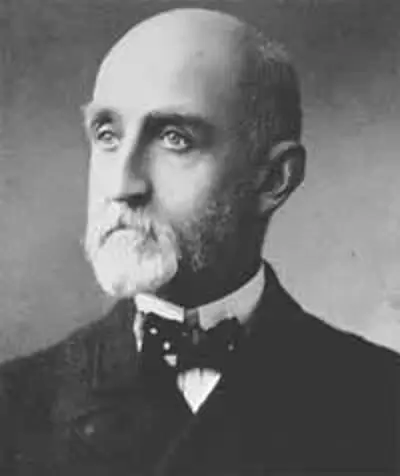
- Born: September 27, 1840
- Died: December 1, 1914
- Nationality:
- Profession:
Alfred Thayer Mahan was a United States naval officer and historian, whom John Keegan called "the most important American strategist of the nineteenth century." His book The Influence of Sea Power Upon History, 1660–1783 (1890) won immediate recognition, especially in Europe, and with its successor, The Influence of Sea Power Upon the French Revolution and Empire, 1793–1812 (1892), made him world-famous and perhaps the most influential American author of the nineteenth century.
