Alfred Thayer Mahan Quotes
It has been said that, in our present state of unpreparedness, a trans-isthmian canal will be a military disaster to the United States, and especially to the Pacific coast. When the canal is finished the Atlantic seaboard will be neither more nor less exposed than it now is; it will merely share with the country at large the increased danger of foreign complications with inadequate means to meet them. The danger of the Pacific coast will be greater by so much as the way between it and Europe is shortened through a passage which the stronger maritime power can control. The danger lies not merely in the greater facility for dispatching a hostile squadron from Europe, but also in the fact that a more powerful fleet than formerly can be maintained on that coast by a European power
This historical quotation is important for two reasons, First, it shows us that the concept of a Canal was discussed fully a decade before Theodore Roosevelt actually had it built. Second, there were those who feared that a canal would actually be a detriment to the United States as our Navy was then quite weak. TR however built up the navy and made a great world-wide show of it and also built the Panama Canal.
Alfred Thayer Mahan, 1840-1914, U. S. Navy Admiral & writer on naval affairs, “The United States Looking Outward”, The Atlantic Monthly, December 1890
Sourced by: Eigen's Political and Historical Quotations


See {629350} for his reason that we had to have a strong navy.


More than a decade before Hamilton wrote this, a Maryland commission used the phrase “well regulated militia” earlier. (See {588394}.) It would be less than 2 years before the phrase “well regulated militia” would be added into the Constitution in the 2nd Amendment of the Bill of Rights—September 25, 1789. The Maryland resolution was the last of several passed at a meeting by which Maryland endorsed resistance to the British before the actual Revolution. So these resolations would have been widely distributed throughout the colonies and known by the leaders. Whether the drafters of the 2nd Amendment got the phrase from Hamilton’s Federalist 29 or from the Maryland Resolutions is not known but Hamilton’s was much more current. Did he get the phrase from Maryland? Did Congress get it from him? Did Maryland originate the phrase or was there an earlier use that influenced the Maryland drafters? At this point no one is sure, but the phrase is critical to the meaning of the 2nd Amendment because the Supreme Court has repeatedly held that the Second Amandment does not apply to individuals but only to the State’s right to bear arms within the “well regulated militia” and not as individual citizens. The right is that of the State government and that is why a state can control guns including banning them if they choose. So an individual in America does not have the constitutional right to bear arms. He may have a state constitutional right but in other states he may not use a gun in certain places and may not possess certain types of guns like hand guns which are illegal in New York, Washington DC and some other places.


This quotation illustrates several historical differences of the past with today. To be a world superpower, one had to have a dominant navy. Yet that navy was, in Churchill’s concept, a defensive system. It could protect the nation from invasion, and its merchant ships on the seas, but a navy provided no threat to invade towns and villages in Europe or elsewhere. Germany and France in contrast, with their large armies could invade other nations and menace Europe and Asia. It also illustrates why the navy and the army were considered completely separate departments of government in that they had different functions. The early American government had a Navy Department and Secretary but no Secretary of the Army or standing army.


Nkrumah was one of the great African democrats. Like George Washington, he voluntarily relinquished his Presidency when most would have had him as a “President for Life,” or even a king. His greater vision was one of pan-Africanism. In the defense arena he didn’t realize that the major purposes of most African military was to maintain the existing regime in power unlike his own example. He further assumed that military threats would come from outside the continent as they historically had. However, virtually all the conflict in Africa has been between contending groups within a country and nearby countries taking sides and thus being drawn into the conflict.


The era of American imperialism and international expansion was just beginning, and Turner and predicted the political dynamics and the result in this quotation. Note the desirability of an inter-ocean Canal was well understood before TR organized the Panama Canal effort.


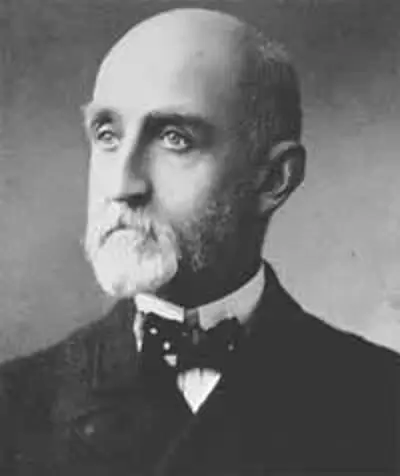
Alfred Thayer Mahan was a United States naval officer and historian, whom John Keegan called "the most important American strategist of the nineteenth century." His book The Influence of Sea Power Upon History, 1660–1783 (1890) won immediate recognition, especially in Europe, and with its successor, The Influence of Sea Power Upon the French Revolution and Empire, 1793–1812 (1892), made him world-famous and perhaps the most influential American author of the nineteenth century.
