Frederick Jackson Turner Quotes
For nearly three centuries the dominant fact in American life has been expansion. With the settlement of the Pacific coast and the occupation of the free lands, this movement has come to a check. That these energies of expansion will no longer operate would be a rash prediction; and the demands for a vigorous foreign policy, for an interoceanic canal, for a revival of our power upon the seas, and for the extension of American influence to outlying islands and adjoining countries, are indications that the movement will continue. The stronghold of these demands lies west of the Alleghenies.
The era of American imperialism and international expansion was just beginning, and Turner and predicted the political dynamics and the result in this quotation. Note the desirability of an inter-ocean Canal was well understood before TR organized the Panama Canal effort.
Frederick Jackson Turner, 1861–1932, Historian, “The Problem Of The West”, The Atlantic Monthly, September 1896
Sourced by: Eigen's Political and Historical Quotations

Jefferson had insisted that the expedition was purely scientific. The fact that it was lead by two military officers and involved soldiers led many to suspect the expedition was an “invasion” of what was then officially Spanish Territory. The very small size of the expedition made the concept of an expansion effort seemingly ridiculous to many. Jefferson was never public about his hopes fort the eventual possibilities but Martinez seemed to have gotten it right but was paid little heed.

He was referring to land where there were people already living. People included Indians and Mexicans. He was one of the few American Presidents who were not enthusiasts for Manifest Destiny and expansionism of America.


This historical quotation is important for two reasons, First, it shows us that the concept of a Canal was discussed fully a decade before Theodore Roosevelt actually had it built. Second, there were those who feared that a canal would actually be a detriment to the United States as our Navy was then quite weak. TR however built up the navy and made a great world-wide show of it and also built the Panama Canal.


The Assistant Secretary of the Navy to whom he referred was none other than Franklin Delano Roosevelt
At the time our strongest allies in the Middle East were Monarchies, dictatorships, and Principalities. See {586706}


Teddy Roosevelt dispatched 16 battleships (The Great White Fleet) around the world to impress the Japanese and others with American naval strength:
Maury helped organize the Thomas Walker expeditions. These were precursors to the Jefferson organized Lewis and Clark expedition later.


First Indian to hold the position
Bell was an American who worked for the London Times.


This was an amazing prediction for the time. Most Europeans were not sure that the United States would even survive, and Russia was looked upon as the most backward nation in Europe. By the middle of the 20th century—over 100 years after Tocqueville wrote this—The United States and Russia were the two superpowers of the world.
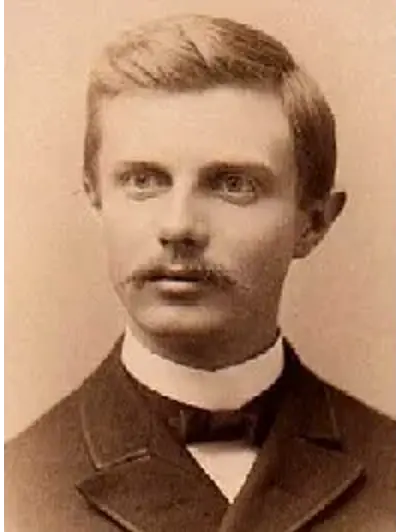
Frederick Jackson Turner was an American historian during the early 20th century, based at the University of Wisconsin until 1910, and then Harvard University. He was known primarily for his anti-Indigenous "Frontier Thesis". He trained many PhDs who became well-known historians. He promoted interdisciplinary and quantitative methods, often with an emphasis on the Midwest. His best known publication is his essay "The Significance of the Frontier in American History", the ideas of which formed the Frontier Thesis. He argued that the moving western frontier exerted a strong influence on American democracy and the American character from the colonial era until 1890. He is also known for his theories of geographical sectionalism. During recent years historians and academics have argued frequently over Turner's work; all agree that the Frontier Thesis has had an enormous effect on historical scholarship.
