Ely S. Parker Quotes
To-day, by reason of the immense augmentation of the American population, and the extension of their settlements throughout the entire west, covering both slopes of the Rocky Mountains, the Indian races are more seriously threatened with a speedy extermination than ever before in the history of the country.
First Indian to hold the position
Ely S. Parker, 1828-1895, [Hasanoanda], Seneca Sachem, United States Army General, United States Indian Commissioner 1864
Sourced by: Eigen's Political and Historical Quotations

The first Native American to become a General Officer. Appointed by President Grant in 1869


This comprehensive report of 457 pages was written, printed and distributed at her expense prior to her Federal appointment.


Published 100 years after it was written. This is the first known written statement of what became a de facto policy regarding the American Indian.


Clinton was a founder of the society. Many sophisticated Americans were in despair about the consequence of White contact with the Indian, and this was even before the worst of the treatment which came later, beginning under the presidency of Andrew Jackson and continuing well into the 20th century. Of particular interest is Clinton’s prescient observations regarding Africa and Africans interacting with whites with slavery the overriding white motive. Clinton was one of the many Americans who were abolitionists from the beginning of the nation.


Wayne played so many parts depicting whites in the process of expanding Westward that many people saw him as an expert on the history of the Westward Expansion. He did not comment on the whites who then kept huge ranches “selfishly” for themselves or those who selfishly would not share the mineral rich land that they had taken with anyone including the original Indian owners. So in this view, the Indians should have not been capitalists but they should have been socialists and shared their resources.

Carson was one of the few Indian Agents who spent every penny of his budget on the Indians as opposed to himself. He was married to an Indian woman and was close enough to many Indians that he understood their resentment whenever they came into a town. They were treated terribly and while most of them were literally starving, seeing the white opulence produced resentment.

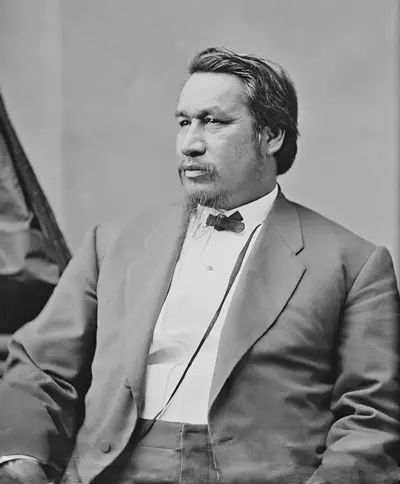
Ely Samuel Parker, born Hasanoanda, later known as Donehogawa, was a Tonawanda Seneca U.S. Army officer, attorney, engineer, and tribal diplomat. He was commissioned a lieutenant colonel during the American Civil War, when he served as adjutant and secretary to General Ulysses S. Grant. He wrote the final draft of the Confederate surrender terms at Appomattox. Later in his career, Parker rose to the rank of brevet brigadier general. When Grant was elected president, he appointed Parker as Commissioner of Indian Affairs, the first Native American to hold that post.
