Kit Carson Quotes
They [Native Americans] should not be allowed to come into the settlements, for every visit an Indian makes to a town, it is more or less injury to him.
Carson was one of the few Indian Agents who spent every penny of his budget on the Indians as opposed to himself. He was married to an Indian woman and was close enough to many Indians that he understood their resentment whenever they came into a town. They were treated terribly and while most of them were literally starving, seeing the white opulence produced resentment.
Kit Carson, 1809-1868, Frontiersman and Military Scout to John Charles Fremont, Indian Agent and Civil War Union General, Dictated Memoir, 1856
Sourced by: Eigen's Political and Historical Quotations

Justification for policy of settling all Indians west of the Mississippi River.


The Iroquois were among the most sophisticated of the North American Indian Tribes. They also were highly assimilated into the American society. In the next decades, they would switch their political position when New York State provided better legal guarantees for Iroquois land than the Federal Government. By the end of the 20th Century, led by the Iroquois, the Indian residents of New York State had the same level of earnings as the white man—and that was with NO INDIAN GAMING.


The first Native American to become a General Officer. Appointed by President Grant in 1869


To many, this quotation is shocking. TR was a presidential pioneer in race relations being the first President to ever invite a Black to dine at the White House. See {588996} for his views on Blacks. Although modern and liberal with respect to most minorities, TR had a major blind spot regarding Native Americans and was among the worst racists.


Introducing a bill to require a name change for the Washington professional football team:

In early America large numbers of whites who had been captured by Indians would refuse to leave their new families even when they had the opportunity to do so. J. Hector St. John

Early in his career Grant was a young lieutenant assigned to a Western outpost. His wife was worried about the Indians.


This law governed the territories outside of the original 13 colonies. The intentions of the founding fathers and the first Congress to the Indians was fair and honorable. However, there was no practical way that the new Federal Government could enforce this principle in the territories. A single greedy land speculator or trader could abuse a group of Indians and start a small war. The vast cultural differences between Indians and whites tended to polarize all violent conflicts regardless of who was at fault. The different perceptions of cruelty and atrocities further pushed the government to defend whites violating national policy and there was sufficient corruption and money to be made on Indian land and trading and things went downhill fast.
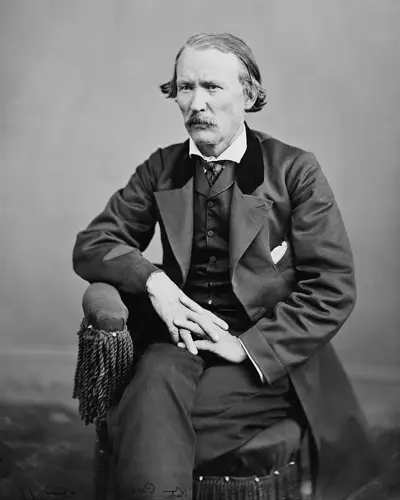
Christopher Houston Carson, better known as Kit Carson, was an American frontiersman. He was a fur trapper, wilderness guide, Indian agent, and U.S. Army officer. He became a frontier legend in his own lifetime by biographies and news articles, and exaggerated versions of his exploits were the subject of dime novels. His understated nature belied confirmed reports of his fearlessness, combat skills, tenacity, and profound effect on the westward expansion of the United States. Although he was famous for much of his life, historians in later years have written that Kit Carson did not like, want, or even fully understand the celebrity that he experienced during his life.
