Brigham Young Quotes
Do we wish the Indians any evil? No we would do them good, for they are human beings, though most awfully degraded. We would have taught them to plow & sow, and reap and thresh, but they prefer idleness and theft.
Brigham Young, 1801-1877, Mormon Leader and Governor of Utah, Letter to John M. Bernhisel, 1850
Sourced by: Eigen's Political and Historical Quotations

Carson was one of the few Indian Agents who spent every penny of his budget on the Indians as opposed to himself. He was married to an Indian woman and was close enough to many Indians that he understood their resentment whenever they came into a town. They were treated terribly and while most of them were literally starving, seeing the white opulence produced resentment.


This quotation is often used as the greatest evidence the white usurpation of Indian land and the dubious value of all the treaties that had been made with the Indians guaranteeing them specific lands. Jackson, however, was not completely accurate. The Iroquois who fought on the American side in the Revolution were still on their lands in New York State. However, the Iriquois had their dealings with the State and local governments, and fared better than those tribes that depended in the Federal Government—especially with racists like Jackson in the Presidency.


To many, this quotation is shocking. TR was a presidential pioneer in race relations being the first President to ever invite a Black to dine at the White House. See {588996} for his views on Blacks. Although modern and liberal with respect to most minorities, TR had a major blind spot regarding Native Americans and was among the worst racists.


In early America large numbers of whites who had been captured by Indians would refuse to leave their new families even when they had the opportunity to do so. J. Hector St. John

Justification for policy of settling all Indians west of the Mississippi River.


Black Natives with property had voted and served on juries. This was abhorrent to the Afrikaners whom Rhodes wanted as political allies so he switched his position on native suffrage.

Miller was the first Black American admitted to a Graduate Program—Johns Hopkins—in Mathematics

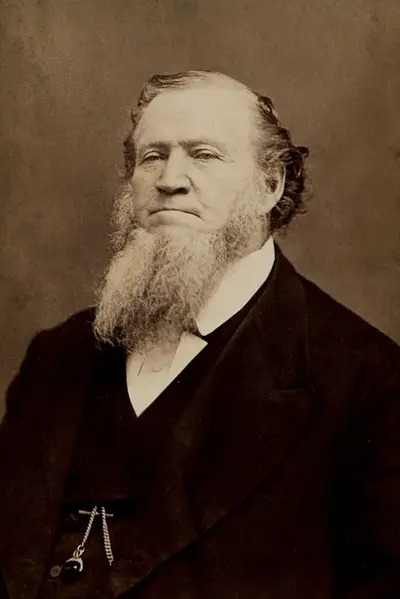
Brigham Young was an American religious leader, politician, and settler. He was the second president of The Church of Jesus Christ of Latter-day Saints (LDS Church) from 1847 until his death in 1877. He founded Salt Lake City and served as the first governor of the Utah Territory. Young also led the foundings of the precursors to the University of Utah and Brigham Young University.
