Black Hawk Quotes
An Indian who is as bad as the white men could not live in our nation.... The white men do not scalp the head; but they do worse. They poison the heart.
Black Hawk, 1767-1838, Sac and Fox Indian Chief, 1832
Sourced by: Eigen's Political and Historical Quotations


“Cleaned out” meant destroyed. He had been a strong advocate of peace with whites. See {610679} .

Samuel Langhorne Clemens, 1835-1910. Twain was one of the few whites who realized that success in assimilating American Indians would destroy their culture and identity. Even today, whites and Indians alike constantly debate the desirability of assimilation policies and supporting independent reservations.

Carson was one of the few Indian Agents who spent every penny of his budget on the Indians as opposed to himself. He was married to an Indian woman and was close enough to many Indians that he understood their resentment whenever they came into a town. They were treated terribly and while most of them were literally starving, seeing the white opulence produced resentment.


Published 100 years after it was written. This is the first known written statement of what became a de facto policy regarding the American Indian.

To many, this quotation is shocking. TR was a presidential pioneer in race relations being the first President to ever invite a Black to dine at the White House. See {588996} for his views on Blacks. Although modern and liberal with respect to most minorities, TR had a major blind spot regarding Native Americans and was among the worst racists.


Wayne played so many parts depicting whites in the process of expanding Westward that many people saw him as an expert on the history of the Westward Expansion. He did not comment on the whites who then kept huge ranches “selfishly” for themselves or those who selfishly would not share the mineral rich land that they had taken with anyone including the original Indian owners. So in this view, the Indians should have not been capitalists but they should have been socialists and shared their resources.


This comprehensive report of 457 pages was written, printed and distributed at her expense prior to her Federal appointment.
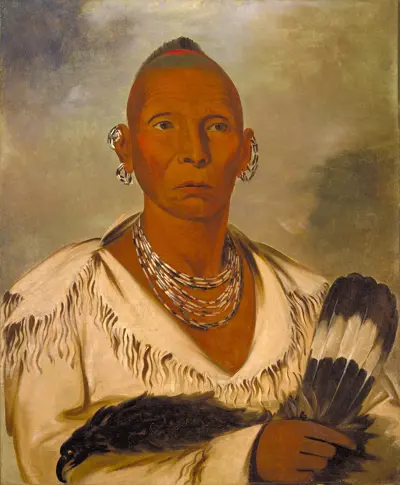
Black Hawk, born Ma-ka-tai-me-she-kia-kiak, was a band leader and warrior of the Sauk Native American tribe in what is now the Midwest of the United States. Although he had inherited an important historic sacred bundle from his father, he was not a hereditary civil chief. Black Hawk earned his status as a war chief or captain by his actions: leading raiding and war parties as a young man and then a band of Sauk warriors during the Black Hawk War of 1832.
