Tecumseh Quotes
Brothers, the white men are not friends to the Indians: at first, they only asked for land sufficient for a wigwam; now, nothing will satisfy them but the whole of our hunting grounds, from the rising to the setting sun. Brothers, the white men want more than our hunting grounds; they wish to kill our old men, women, and little ones.
Tecumseh, 1768-1813, Shawnee Indian leader, Speech to the Osage Indians, 1811
Sourced by: Eigen's Political and Historical Quotations

See {42210}, {626788}, {626784}. Palmer had been a potential Presidential candidate until his excesses ended that possibility.


The century to which he was referring was the 19th century---1800-1899.

Wayne played so many parts depicting whites in the process of expanding Westward that many people saw him as an expert on the history of the Westward Expansion. He did not comment on the whites who then kept huge ranches “selfishly” for themselves or those who selfishly would not share the mineral rich land that they had taken with anyone including the original Indian owners. So in this view, the Indians should have not been capitalists but they should have been socialists and shared their resources.


The first Native American to become a General Officer. Appointed by President Grant in 1869


Published 100 years after it was written. This is the first known written statement of what became a de facto policy regarding the American Indian.


The Indians did not have the wheel when the whites came, but soon there were wagons, stage coaches and railroads.


At the time there were relatively few natives left. The remainder were hunted and exterminated. Only 75 were left at the end of the “Black War” where there had been about 5,000 at the beginning. See {618042}.

“Cleaned out” meant destroyed. He had been a strong advocate of peace with whites. See {610679} .
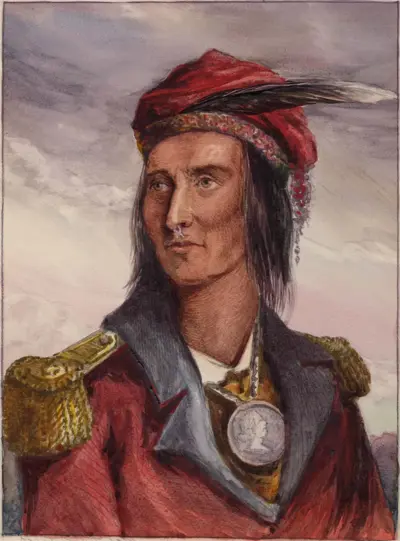
- Born: October 5, 1813
- Died: October 5, 1813
- Nationality: Native American (Shawnee)
- Profession: Novelist
Tecumseh was a Shawnee chief and warrior who promoted resistance to the expansion of the United States onto Native American lands. A persuasive orator, Tecumseh traveled widely, forming a Native American confederacy and promoting inter-tribal unity. Although his efforts to unite Native Americans ended with his death in the War of 1812, he became an iconic folk hero in American, Indigenous, and Canadian popular history.
