Ernest Bevin Quotes
What astounds me about the history of the British Navy is how cheaply we have policed the world for 300 years.
Bullock, Alan. Ernest Bevin: Foreign Secretary, 1945-1951. Heinemann, 1983.

This quotation illustrates several historical differences of the past with today. To be a world superpower, one had to have a dominant navy. Yet that navy was, in Churchill’s concept, a defensive system. It could protect the nation from invasion, and its merchant ships on the seas, but a navy provided no threat to invade towns and villages in Europe or elsewhere. Germany and France in contrast, with their large armies could invade other nations and menace Europe and Asia. It also illustrates why the navy and the army were considered completely separate departments of government in that they had different functions. The early American government had a Navy Department and Secretary but no Secretary of the Army or standing army.


In the first year of WWI, the British Fleet kept the German Fleet bottled up in port. As a result, the British had a very successful sea embargo against the Germans who rarely challenged the British fleet even though they had some major, powerful, capital ships. See {642234}. Meanwhile, the German ships were in no position to harass much less destroy Allied (French, Russian or English) shipping.


Germany had world power aspirations before Adolf Hitler.

Teddy Roosevelt dispatched 16 battleships (The Great White Fleet) around the world to impress the Japanese and others with American naval strength:


Germany had a very small and insignificant navy. It was Tirpitz who persuaded the nation to develop sea power.


America’s oldest foreign policy problem has been freedom of the seas for American shipping. Since the end of WWII, the U. S. however performed this function—and pays for it—for the entire world with some minor exceptions.


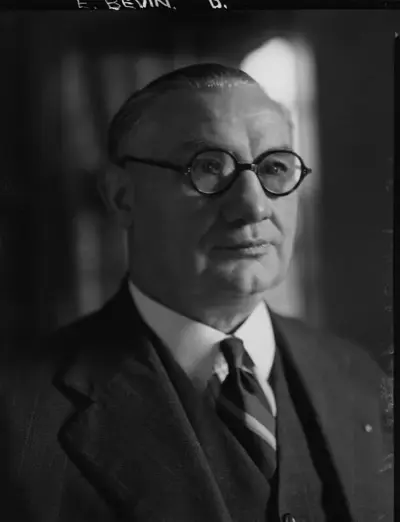
Ernest Bevin was a British statesman, trade union leader, and Labour politician. He co-founded and served as General Secretary of the powerful Transport and General Workers' Union in the years 1922–1940, and served as Minister of Labour and National Service in the war-time coalition government. He succeeded in maximising the British labour supply, for both the armed services and domestic industrial production, with a minimum of strikes and disruption.
