Walter Raleigh Quotes
Whoever commands the sea, commands the trade; whosoever commands the trade of the world commands the riches of the world, and consequently the world itself.
Raleigh, Sir Walter. A Discourse of the Invention of Ships, Anchors, Compass, &c. London, William Sheares, 1650, p. 2.


This quotation illustrates several historical differences of the past with today. To be a world superpower, one had to have a dominant navy. Yet that navy was, in Churchill’s concept, a defensive system. It could protect the nation from invasion, and its merchant ships on the seas, but a navy provided no threat to invade towns and villages in Europe or elsewhere. Germany and France in contrast, with their large armies could invade other nations and menace Europe and Asia. It also illustrates why the navy and the army were considered completely separate departments of government in that they had different functions. The early American government had a Navy Department and Secretary but no Secretary of the Army or standing army.

Germany had a very small and insignificant navy. It was Tirpitz who persuaded the nation to develop sea power.


Frederick the Great. He and many other Europeans thought that England had been so preoccupied with the American rebellion that she was ignoring Europe and other traditional foreign policy interests of theirs.


In the first year of WWI, the British Fleet kept the German Fleet bottled up in port. As a result, the British had a very successful sea embargo against the Germans who rarely challenged the British fleet even though they had some major, powerful, capital ships. See {642234}. Meanwhile, the German ships were in no position to harass much less destroy Allied (French, Russian or English) shipping.


There were few military thinkers at that time who would agree with Goebbels on this point.

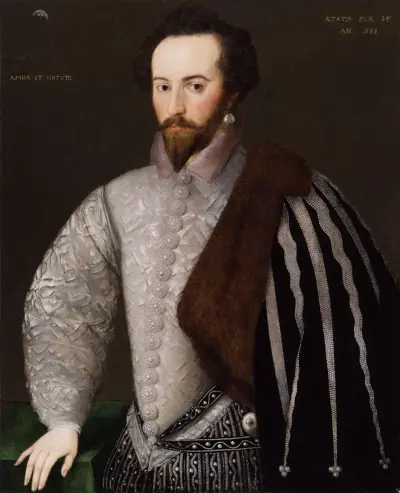
Sir Walter Raleigh, also spelled Ralegh, was an English statesman, soldier, spy, writer, poet, explorer, and landed gentleman. One of the most notable figures of the Elizabethan era, he played a leading part in English colonisation of North America, suppressed rebellion in Ireland, helped defend England during the Spanish Armada and held political positions under Elizabeth I.
