Thomas Campbell Quotes
Britannia needs no bulwarks, No towers along the steep; Her march is o'er the mountain waves, Her home is on the deep.
Campbell, Thomas. "Ye Mariners of England." The Poetical Works of Thomas Campbell, Edward Moxon, 1837, p. 82.


Germany had a very small and insignificant navy. It was Tirpitz who persuaded the nation to develop sea power.

This quotation illustrates several historical differences of the past with today. To be a world superpower, one had to have a dominant navy. Yet that navy was, in Churchill’s concept, a defensive system. It could protect the nation from invasion, and its merchant ships on the seas, but a navy provided no threat to invade towns and villages in Europe or elsewhere. Germany and France in contrast, with their large armies could invade other nations and menace Europe and Asia. It also illustrates why the navy and the army were considered completely separate departments of government in that they had different functions. The early American government had a Navy Department and Secretary but no Secretary of the Army or standing army.


This article reached America where the insult proved a patriotic rallying point.


In the first year of WWI, the British Fleet kept the German Fleet bottled up in port. As a result, the British had a very successful sea embargo against the Germans who rarely challenged the British fleet even though they had some major, powerful, capital ships. See {642234}. Meanwhile, the German ships were in no position to harass much less destroy Allied (French, Russian or English) shipping.


The German naval command—without the permission of the Kaiser—at the eve of a losing war decided that the entire German navy would make a grand attack against the far superior English fleet. It was to be a virtual suicide attack on a grand scale. However, most German sailors heard about the plan and refused orders to attack in what was the largest mutiny in history. The German naval leaders then took the fleet out to sea and scuttled all the ships so that the English would not capture them. The result was the same but tens of thousands of lives were saved; many German officers felt that German naval honor had been lost.

Teddy Roosevelt dispatched 16 battleships (The Great White Fleet) around the world to impress the Japanese and others with American naval strength:


Military men tend to rely so much on military history that they are almost always fighting the last war. Soon air power would supplant sea power as the critical factor. Then nuclear power, and then nuclear weapons became too severe for actual use and yet wars still continued with no consensus as to that will be in the future.


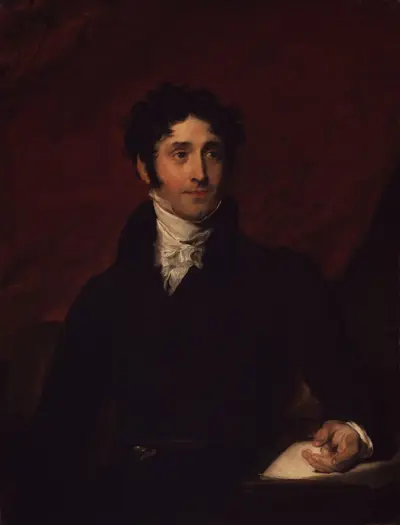
Thomas Campbell was a Scottish poet. He was a founder and the first President of the Clarence Club and a co-founder of the Literary Association of the Friends of Poland; he was also one of the initiators of a plan to found what became University College London. In 1799 he wrote "The Pleasures of Hope", a traditional 18th-century didactic poem in heroic couplets. He also produced several patriotic war songs—"Ye Mariners of England", "The Soldier's Dream", "Hohenlinden" and, in 1801, "The Battle of the Baltic".
