Samuel E. Morison Quotes
But sea power has never led to despotism. The nations that have enjoyed sea power even for a brief period-Athens, Scandinavia, the Netherlands, England, the United States-are those that have preserved freedom for themselves and have given it to others. Of the despotism to which unrestrained military power leads we have plenty of examples from Alexander to Mao.
Morison, Samuel E. The Two-Ocean War: A Short History of the United States Navy in the Second World War. Little, Brown and Company, 1963, p. 2.


In the first year of WWI, the British Fleet kept the German Fleet bottled up in port. As a result, the British had a very successful sea embargo against the Germans who rarely challenged the British fleet even though they had some major, powerful, capital ships. See {642234}. Meanwhile, the German ships were in no position to harass much less destroy Allied (French, Russian or English) shipping.

Military men tend to rely so much on military history that they are almost always fighting the last war. Soon air power would supplant sea power as the critical factor. Then nuclear power, and then nuclear weapons became too severe for actual use and yet wars still continued with no consensus as to that will be in the future.


With so many revolutionary rulers of new nations suppressing all opposition, the history of Ataturk and Turkey is unique. Ataturk was so popular and his People’s Party so successful that there was no opposition and Turkey had one party rule. However, Ataturk was determined to have Turkey become a parliamentary democracy as good as the Western nations of Europe. So a tradition of multi-party democracy was needed. So Ataturk actually went to his friend Fethi Okyar and asked him to start an opposition party and oppose the government. Fethi was a strong supporter of the revolution and generally was in concurrence with Ataturk and the People’s Party on everything. Ataturk however convinced him that they had to start a tradition that would take Turkey through the future, and he did create a new party-- Serbest Cumhuriyet Fırkası (Liberal Republican Party) and worked hard to find differences with the People’s Party and the Government. One immediate contribution was the oversight that the new party provided—a strong tradition that exists to this day in Turkey.

He was arguing that the government should be able to prohibit public demonstrations on the grounds that the protesters are “irresponsible power.” This position has been taken sometimes by the American right, and is common in all totalitarian states.

Charles I had caused the death of his subjects with impunity and was called to account. However, the English Parliament did not know what specific crime the King had committed. Kings had executed people, guilty of crimes and otherwise, for centuries. For what could a king be accountable. Cooke developed the crime of Tyranny and drew up and presented the indictment for that. The King was found guilty and executed. This was the first time in legal history that a ruler was called to account for crimes committed against his own people. It became the foundation for many trials thereafter including that of Saddam Hussein in 2006.


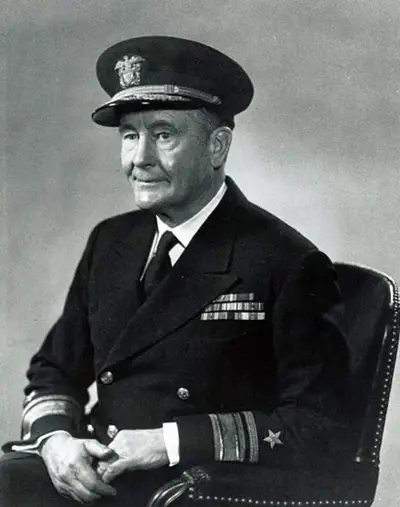
Samuel Eliot Morison was an American historian noted for his works of maritime history and American history that were both authoritative and popular. He received his Ph.D. from Harvard University in 1912, and taught history at the university for 40 years. He won Pulitzer Prizes for Admiral of the Ocean Sea (1942), a biography of Christopher Columbus, and John Paul Jones: A Sailor's Biography (1959). In 1942, he was commissioned to write a history of United States naval operations in World War II, which was published in 15 volumes between 1947 and 1962. Morison wrote the popular Oxford History of the American People (1965), and co-authored the classic textbook The Growth of the American Republic (1930) with Henry Steele Commager.
