John Stuart Mill Quotes
It is also absolutely necessary that the examinations should be competitive, and the appointments given to those who are most successful. A mere pass examination never, in the long run, does more than exclude absolute dunces.
John Stuart Mill, 1806-1873, Member of Parliament, British Political Economist, Representative Government, 1861
Sourced by: Eigen's Political and Historical Quotations

This law established the Civil Service Commission and for the first time in American History required open examinations for the appointing of government employees. Japan had required examinations for civil service for hundreds of years. President Garfield had called for such legislation in his inaugural address {586804} 2 years earlier. This was the legislation that implemented it.


The George W. Bush administration, violated the Civil Service Law and the traditions of the Justice Department by making hiring and assignment decisions on the basis of political ideology and participation. Making the situation worse, the political people who were put in senior positions of authority were often not very well qualified and far less so than the people they ended up supervising and outranking. The inspector general of the Justice Department, after being stonewalled, finally uncovered the mess and Monica Goodling, one of the worst offenders, was barred from ever working for the Justice Department again.


2nd Viscount Melbourne. The pressure for appointments to key positions has always been a problem in modern America. What is surprising in this quotation is that the exact same problems existed in a constitutional monarchy in 19th century England. Note the formality of the form of address in letters to the Queen. Lamb refers to himself in the third person by his aristocratic title, “Lord Melboure”, rather than the first person “I” which would have been too familiar in the address of the monarch. Many English communications with the King or Queen, even in modern times, is this archaic form of address.

This quotation illustrates another political advancement instituted by Queen Victoria. In this case it was Merit Appointments which were almost unheard of. The Foreign Secretary, Lord Palmerston, was notorious for his crony appointments and the use of appointments to gain political support for himself. (He was good at it and became prime minister 4 years later.0 However, under the Queen’s constant insistence and pressure, merit began to be the major factor in selection and appointments. Ironically, even in the United States, diplomats though often very qualified, are one of the last vestiges of patronage appointments with many ambassadorships going to campaign contributors.

While business generally pays much more than Federal service, there are many brilliant people in the government who are not primarily motivated by making the most possible money. NIST for example had two Nobel Prize winners, and several others have served in the National Institutes of Health. Some of the best economists have worked for the government, and the military is full of outstanding men and women of intellect. But generally, with its higher salaries, the private sector has the recruiting advantage though not to the degree Regan implied.


This is an important quotation because it was believed by most of the Founding Fathers and the American public until relatively recently. Presidential candidates would not think of publicly campaigning. The view was that anyone who was ambitious for power and authority should not be trusted with it. The idea was first stated by Plato and has been a major view of Western politics since. Many still believe it, but no one has come up with a practical alternative in a large jurisdiction where there is no way to know about the possible candidates without their initiative. Earlier American presidential candidates, although they did not campaign as we know it, got associates to do their campaigning for them. At Presidential nominating conventions, candidates would not even attend. Abraham Lincoln for example never attended the convention at which he got nominated, but he had associates lining up delagates and he was managing their efforts behind the scenes.
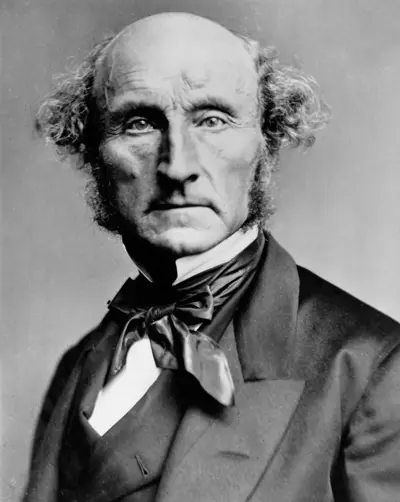
John Stuart Mill, usually cited as J. S. Mill, was an English philosopher, political economist, Member of Parliament, and civil servant. One of the most influential thinkers in the history of classical liberalism, he contributed widely to social theory, political theory, and political economy. Dubbed "the most influential English-speaking philosopher of the nineteenth century", he conceived of liberty as justifying the freedom of the individual in opposition to unlimited state and social control.
