William Lamb, 2nd Viscount Melbourne Quotes
Lord Melbourne entirely agrees with your Majesty about appointments. He knows, as your Majesty does from experience, that with all the claims which there are to satisfy, with all the prejudices which are to be encountered, and with all the interests which require to be reconciled, it is impossible to select the best men, or even always those properly qualified.
2nd Viscount Melbourne. The pressure for appointments to key positions has always been a problem in modern America. What is surprising in this quotation is that the exact same problems existed in a constitutional monarchy in 19th century England. Note the formality of the form of address in letters to the Queen. Lamb refers to himself in the third person by his aristocratic title, “Lord Melboure”, rather than the first person “I” which would have been too familiar in the address of the monarch. Many English communications with the King or Queen, even in modern times, is this archaic form of address.
William Lamb, 1779-1848, British Prime Minister (Whig), Letter to Queen Victoria, September 12, 1841
Sourced by: Eigen's Political and Historical Quotations

2nd Viscount Melbourne. The appointments to the Queen’s household was one of the powers that was contested by Parliament and the Monarchy. The Queen’s Ladies in Waiting or Secretary would seem to be very personal positions of which the Queen would make the decision, however these were very desirable positions that were used by the party in power to reward loyal supports of the party. As a practical matter, each of these appointments were the subject of negotiations between the Parliament and the Queen. The most competent people were not necessarily chosen—see {625949} . What is interesting to us today is the importance that the Queen and the Parliament placed on the spouse of the appointee. From the Queen’s point of view the character of the family of an appointee was extremely important to avoid scandal and have the queen support proper values as an example to the nation. To Parliament it was an issue of Patronage. A Lady in Waiting was an important member of the court and most upper class women coveted that position. The ruling party however did not want to see the wives of the opposition party members to get these plum positions and wanted to reward their own members by appointing their wives. Today, the character of a spouse of a potential appointee sometimes is a factor but there are many who believe that it should never be.


a posh upper-class private club joined by most Conservative politicians


While the George W. Bush administration polarized the civil service by appointing ideological zealots without regard to competence and qualifications, Conservative Australian Prime Minister John Howard, had actually done the same thing before him.

There are many democracies that have run into this problem at many times. Even the United States had situations like this. The Adams-Jefferson Presidential Contest caused President Adams to curtail civil rights so he could not be as viciously attacked. The polarization after the first Black was elected president in 2008 was another period of destructive contention and polarization.
Hayes was a Civil Service reformer. After the presidency of John Quincy Adams, Andrew Jackson and subsequent Presidents fired large numbers of public servants—even minor poitions and replaced them with supporters. Hayes stopped that practice and initiated civil servce reform.


Scientists do not generally make good bureaucrats, administrators, or politicians. They tend to avoid these roles, which leaves the people who hold them very scientifically ignorant in an era where science policy and research are the most important factors for the human race.

This quotation illustrates another political advancement instituted by Queen Victoria. In this case it was Merit Appointments which were almost unheard of. The Foreign Secretary, Lord Palmerston, was notorious for his crony appointments and the use of appointments to gain political support for himself. (He was good at it and became prime minister 4 years later.0 However, under the Queen’s constant insistence and pressure, merit began to be the major factor in selection and appointments. Ironically, even in the United States, diplomats though often very qualified, are one of the last vestiges of patronage appointments with many ambassadorships going to campaign contributors.


2nd Baronet Peel. He was then the Chief Secretary of Ireland and only 26 years of age. Patronage jobs, cronyism, and corruption was then extreme in Irish politics.


In dos nations there are people who will reject any negotiated deal in which they do not get everything that they want. Some even will characterize the deal as a sellout or treason. But to be successful the diplomats from both sides must feel that they have gotten enough so that they can persuade their countrymen and political authorities that the nation has gotten enough to make the deal worth while.


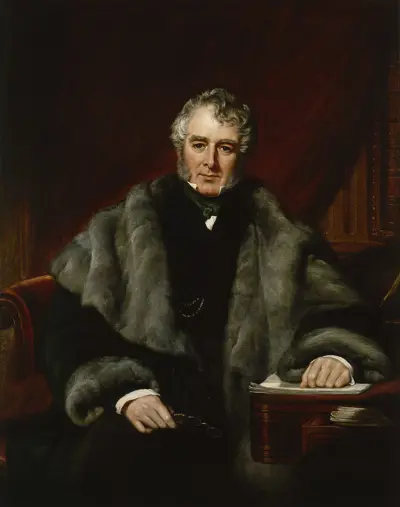
- Born: March 15, 1779
- Died: November 24, 1848
- Nationality: British
- Profession: Statesman
William Lamb, 2nd Viscount Melbourne, PC, PC (Ire), FRS, in some sources called Henry William Lamb, was a British Whig Home Secretary (1830–1834) and Prime Minister (1834 and 1835–1841). He is best known for being prime minister in Queen Victoria's early years and coaching her in the ways of politics, acting almost as her private secretary. Historians have concluded that Melbourne does not rank highly as a Prime Minister, for there were no great foreign wars or domestic issues to handle, he lacked major achievements, he enunciated no grand principles, and he was involved in several political scandals in the early years of Victoria's reign.
