William Jennings Bryan Quotes
Can you let me know what positions you have at your disposal with which to reward deserving Democrats?
William Jennings Bryan, 1860-1925, U. S. Secretary of State, U. S. Congressman (Democrat, NB), 3 Time Unsuccessful Democratic Presidential Candidate, Letter to Walker W. Vick, Receiver-General of the Dominican Republic, August 20, 1913
Sourced by: Eigen's Political and Historical Quotations


Greeley, one of the most powerful and influential newspaper Editors of his day was always bitter that he did not get a patronage job. Newspapers did not make much money then and patronage and cronyism was even more rife than in modern times.

Upon learning that his son, John Quincy Adams, had been chosen President of the United States, the former President remarked:


His role was the equivalent of the Mayor of Washington DC. This quotation is historically important as it shows is the norms for appointments in this era. The local party leaders essentially had the privilege of selecting an appointee provided he was reasonable qualified. Where not he did appoint a few Democrats.

This quotation is valuable because it illustrates the classic implementation of the political spoils system before there was civil service with a merit system. This was not only typical of how people get government jobs, but it was the virtually the only way. In the language of the day, this letter from the Governor to a major political boss says: “Give this fellow a job. He is a loyal party man. Don’t give him a good job—a minor job will do, He is not that important.”


Though the Communist Party was trying to organize and gain support from the unemployed, it was difficult due to the bureaucracy.
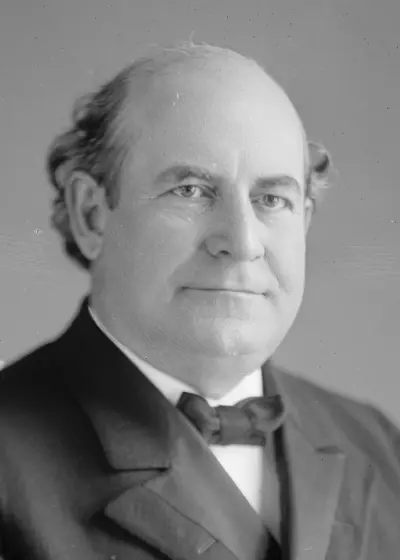
William Jennings Bryan was an American orator and politician from Illinois and Nebraska. Beginning in 1896, he emerged as a dominant force in the Democratic Party, running three times as the party's nominee for President of the United States in the 1896, 1900, and 1908 elections. He also served in the United States House of Representatives and as the United States Secretary of State under Woodrow Wilson. Because of his faith in the wisdom of the common people, he was often called "The Great Commoner".
