William Lamb, 2nd Viscount Melbourne Quotes
The Queen has a perfect right to exercise her judgment upon the selection of all persons recommended to Her Majesty for Household appointments, both as to liking, but chiefly as to their character and as to the character of the husband or wife of the person selected.
2nd Viscount Melbourne. The appointments to the Queen’s household was one of the powers that was contested by Parliament and the Monarchy. The Queen’s Ladies in Waiting or Secretary would seem to be very personal positions of which the Queen would make the decision, however these were very desirable positions that were used by the party in power to reward loyal supports of the party. As a practical matter, each of these appointments were the subject of negotiations between the Parliament and the Queen. The most competent people were not necessarily chosen—see {625949} . What is interesting to us today is the importance that the Queen and the Parliament placed on the spouse of the appointee. From the Queen’s point of view the character of the family of an appointee was extremely important to avoid scandal and have the queen support proper values as an example to the nation. To Parliament it was an issue of Patronage. A Lady in Waiting was an important member of the court and most upper class women coveted that position. The ruling party however did not want to see the wives of the opposition party members to get these plum positions and wanted to reward their own members by appointing their wives. Today, the character of a spouse of a potential appointee sometimes is a factor but there are many who believe that it should never be.
William Lamb, 1779-1848, British Prime Minister (Whig), Statement to Queen Victoria’s Assistant Anson, May 5, 1841
Sourced by: Eigen's Political and Historical Quotations

2nd Viscount Melbourne. The pressure for appointments to key positions has always been a problem in modern America. What is surprising in this quotation is that the exact same problems existed in a constitutional monarchy in 19th century England. Note the formality of the form of address in letters to the Queen. Lamb refers to himself in the third person by his aristocratic title, “Lord Melboure”, rather than the first person “I” which would have been too familiar in the address of the monarch. Many English communications with the King or Queen, even in modern times, is this archaic form of address.


Achtenberg who was later confirmed as Assistant Secretary of HUD was an open lesbian.


This treaty was an attempt to end the 100 Years War.


President Kennedy was an inveterate womanizer both before his presidency and during it.


Kennedy’s pro Nazi and pro Hitler stance and statements when Ambassador to England, destroyed him politically in the United States. However, we transferred his political ambition to his sons, and JFK became the first Catholic President of the United States.

Actually, Queen Elisabeth II, at that time the Queen of England, was very sophisticated about the policies of the nation. Chomsky’s point was not that the Queen was ignorant; it was that her role is ceremonial and it is not critical or even material that the monarch in a Constitutional Democracy understands or approves of the government program that is being presented.


1st Earl of Beaconsfield. The “Second Chamber referred to the House of Lords—the upper house of the British Parliament. The notion in both England and the United States was that the upper house—the Senate in the US case—should be independent and not easily pressured or influenced by the passions and forces of the time. One believe has been that only the wealthy could be independent since people who were not wealthy would be more easily bribed or pressured by forces in the system like a political party. In England at the time, wealth and property were synonymous. In some notable cases in American politics, wealth leaders were very independent and served the society as a whole. Theodore Roosevelt, Franklin Delano Roosevelt, and John F. Kennedy were very wealthy men. So was Abraham Lincoln who had made a great deal of money as a lawyer. Senators and Presidents in America and Members of the House of Lords in England have tended to be much more wealthy than average. Unfortunately, although there were great examples of wealthy independent politicians, many of the upper class have an insensitivity to average people and the poor. Further, they tend to have values and beliefs that are different from most people.


1st Marquees of Halifax. This is a very important quotation because it still has much validity today. The “Prince” is the Monarch, King or Official Heading the State. Savile points out that if the Price does not take the time or make the effort to understand an issue and its complexity, he then must trust his advisors and their opinions rather than have any intelligent and knowledgeable views of his own. In modern times the advice applies to elected officials, executive and legislative. If they do not take time and make the effort to understand a complex issue, they cannot use their own judgment but must accept the judgment of staff, friends, colleagues, party leaders, lobbyists or members of committees who they hope are not also ignorant. In modern legislatures, there are so many different issues in so many areas, that it is very difficult to have the time to make the effort to study all the issues. This problem is compounded with politicians as they tend to spend large amounts of their time fundraising for their next election and simply do not have enough time to study issues. In the Congress for example, most members vote on bills that they have not even read and they end up trusting someone else’s judgment.

Scientists do not generally make good bureaucrats, administrators, or politicians. They tend to avoid these roles, which leaves the people who hold them very scientifically ignorant in an era where science policy and research are the most important factors for the human race.


Note that the Queen always used the 3rd person rather than the 1st when referring to herself. This was true of most of the leading public figures in England at the time. Although she detested Gladstone, she gained control of her feelings and did her duty and “sent for” him to form the Government. She was personally delighted when, as she predicted, his government then had political difficulties.
The Queen assented but warned that members of the Royal Family should stay away from Party Politics.

This quotation illustrates another political advancement instituted by Queen Victoria. In this case it was Merit Appointments which were almost unheard of. The Foreign Secretary, Lord Palmerston, was notorious for his crony appointments and the use of appointments to gain political support for himself. (He was good at it and became prime minister 4 years later.0 However, under the Queen’s constant insistence and pressure, merit began to be the major factor in selection and appointments. Ironically, even in the United States, diplomats though often very qualified, are one of the last vestiges of patronage appointments with many ambassadorships going to campaign contributors.
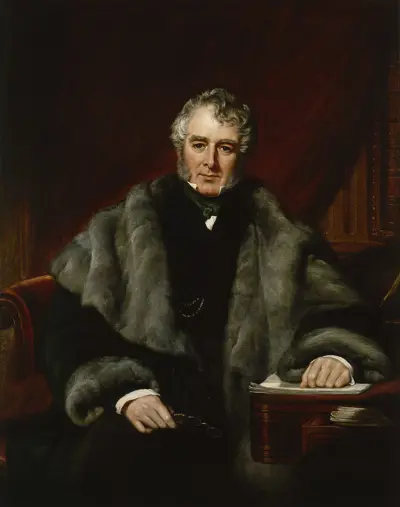
- Born: March 15, 1779
- Died: November 24, 1848
- Nationality: British
- Profession: Statesman
William Lamb, 2nd Viscount Melbourne, PC, PC (Ire), FRS, in some sources called Henry William Lamb, was a British Whig Home Secretary (1830–1834) and Prime Minister (1834 and 1835–1841). He is best known for being prime minister in Queen Victoria's early years and coaching her in the ways of politics, acting almost as her private secretary. Historians have concluded that Melbourne does not rank highly as a Prime Minister, for there were no great foreign wars or domestic issues to handle, he lacked major achievements, he enunciated no grand principles, and he was involved in several political scandals in the early years of Victoria's reign.
