Queen Victoria Quotes
She will sooner abdicate than send for or have any communication with that half mad firebrand who would soon ruin everything & be a Dictator. Others but herself may submit to his democratic rule but not the Queen.
Note that the Queen always used the 3rd person rather than the 1st when referring to herself. This was true of most of the leading public figures in England at the time. Although she detested Gladstone, she gained control of her feelings and did her duty and “sent for” him to form the Government. She was personally delighted when, as she predicted, his government then had political difficulties.
Victoria Alexandrina, 1819-1901, [Queen Victoria], Queen of Great Britain and Ireland & Empress of India, Note to her Private Secretary when Gladstone’s Liberal Party had won the election, 1880
Sourced by: Eigen's Political and Historical Quotations

1st Earl of Beaconsfield. At the time the Queen was not just a figurehead. She made most of the major appointments and had to approve of and sign many documents. In addition, she as the head of state met with foreign royalty and foreign diplomats. She would tell the Prime Minister of policies she wanted made and even how military strategy was to be handled. Although she had much power, she rarely used it and instead relied on her ability to persuade the Prime Ministers and other members of the Government. Disraeli and opposition leader Gladstone exchanged roles as the voters flip flopped between the two parties. Queen Victoria loved working with Disraeli and their meetings, but hated doing so with Gladstone. See {629314}.

Sir Walter was imprisoned in the Tower of London for 13 years, during which time he turned to historical pursuits.


Nine years later he was responsible for Napoleon’s election as Consul.


After the King’s appointment in 1921 she “advised” him on establishing this regime and operating the government. At a time that women could not even vote in England, Bell was a kingmaker and major power in an area of the world that was much more sexist than England at the time.


Many American colonists had relatives and friends in England, and Paine argued that American independence would help and not het the English people.


The Priest was the right wing demagogic radio host of his day. Virulently anti-Semitic and anti-Black, he was threatened with excommunication by the Catholic Church, which finally ordered him to cease us weekly radio show and stop the political hate.


He was expelled from Parliament for such.

Bartolo was the most famous legal expert of his day and for many years thereafter as he died at the age of 44—the height of his career. In Italy, Spain and other nations of Europe there were statutes passed that said if there was no precedent in Roman Law, the writings of Bartolo should dictate the law.

While President Nixon and Henry Kissinger were putting all their eggs in the Shah’s basket, Simon was one of the government who had a different perception of our key ally. See {620093} for a CIA corroborating view.

Prior to Cooke’s indictment of English King Charles I, there was a concept of Royal Impunity—that a sovereign could not legally be called to account for his actions as ruler of the state. The concept of “sovereign immunity” was a concept where the sovereign and his agents could be given immunity for specific actions, but they never would have impunity again where there were no limits to the crimes they might commit against their own people. Charles I refused to even recognize Cooke’s indictment and so have heads of state called to account for their major crimes since then all the way down to Saddam Hussein in 2006 who made the same argument. Cooke was himself hanged, drawn and quartered almost 20 years after the Charles I trial for his part in the “Regicide” so the concept of Royal Impunity did not die quickly.
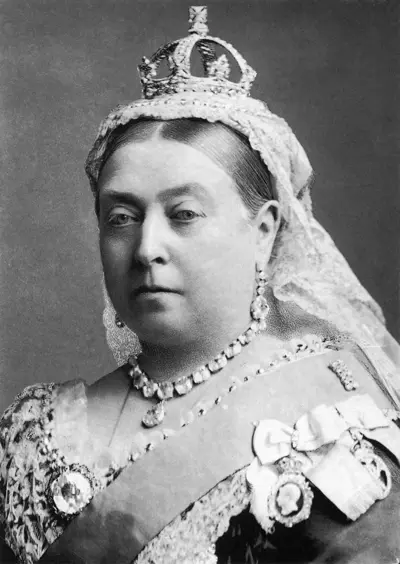
- Born: May 24, 1819
- Died: January 22, 1901
- Nationality: British
- Profession: Royalty
Victoria was Queen of the United Kingdom of Great Britain and Ireland from 20 June 1837 until her death in 1901. Known as the Victorian era, her reign of 63 years and seven months was the longest of any British monarch until surpassed by that of Elizabeth II. It was a period of industrial, political, scientific, and military change within the United Kingdom, and was marked by a great expansion of the British Empire. In 1876, Parliament voted to grant her the additional title of Empress of India.
