Samuel Sidney McClure Quotes
When you read history you that kings who have come to the end of their tether, as a rule, would suffer death rather than give up part of their power.
Samuel Sidney McClure, 1857–1949, Publisher & Muckraking Journalist, Founder and Editor of McClure's Magazine, Statement to members of his staff, 1906
Sourced by: Eigen's Political and Historical Quotations

Note that the Queen always used the 3rd person rather than the 1st when referring to herself. This was true of most of the leading public figures in England at the time. Although she detested Gladstone, she gained control of her feelings and did her duty and “sent for” him to form the Government. She was personally delighted when, as she predicted, his government then had political difficulties.


Porfirio Diaz - the longtime dictator of Mexico stole the election of 1910 and had his opponent Francisco Madero arrested and imprisoned. Madero got out, crossed the border to San Antonio, and issued this declaration which started the Mexican Revolution. See {613620} for the statement that declared the Revolution.

of the monarch of Spain See {629456} for a good example of this.


Many American colonists had relatives and friends in England, and Paine argued that American independence would help and not het the English people.


This is a variation of the famous Lord Acton quotation: {292904}.


Sir Walter was imprisoned in the Tower of London for 13 years, during which time he turned to historical pursuits.


The priest had come to the Empress to complain about the debauchery of her Prime Minister and made the error of describing him as the first man of the empire. The story may be apocryphal but it illustrates the character of the Empress. The source of the exact words are given in the historical novel, Luise Muhlbach, Joseph II. and His Court

Province of the Congo. Both the British and the Belgians were vying for Katanga to become a part of their empire. Msri, a cruel tyrant, was hated by his people, many of whom he had had murdered.


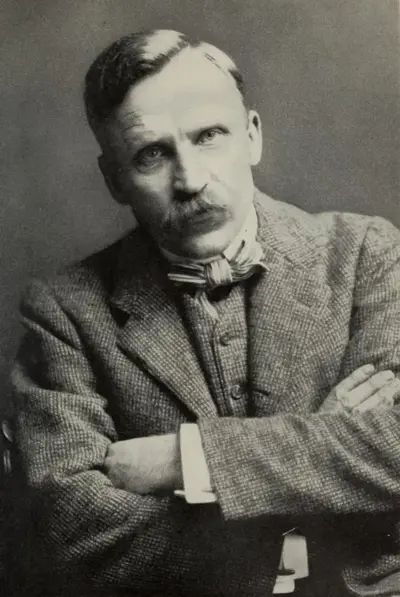
Samuel Sidney McClure was an Irish-American publisher who became known as a key figure in investigative, or muckraking, journalism. He co-founded and ran McClure's Magazine from 1893 to 1911, which ran numerous exposées of wrongdoing in business and politics, such as those written by Ida Tarbell, Ray Stannard Baker, and Lincoln Steffens. The magazine ran fiction and nonfiction by the leading writers of the day, including Sarah Orne Jewett, Mark Twain, William Dean Howells, Joel Chandler Harris, Jack London, Stephen Crane, William Allen White and Willa Cather.
