Charles X Quotes
There is no middle course between the throne and the scaffold.
Charles X, 1757-1836, King of France, Remark to Talleyrand
Sourced by: Eigen's Political and Historical Quotations


Honore Gabriel Victor Requiti. The French King had just opened the French National Assembly which contained deputies (delegates) from the clergy, the nobility and the people. The King had made what some deputies thought was a very constructive and responsible speech opening the assembly. Mirabeau observed that as long as there was an absolute monarch in place, even a benign one. It was the presence of a monarch itself that was evil.


Charles I had caused the death of his subjects with impunity and was called to account. However, the English Parliament did not know what specific crime the King had committed. Kings had executed people, guilty of crimes and otherwise, for centuries. For what could a king be accountable. Cooke developed the crime of Tyranny and drew up and presented the indictment for that. The King was found guilty and executed. This was the first time in legal history that a ruler was called to account for crimes committed against his own people. It became the foundation for many trials thereafter including that of Saddam Hussein in 2006.

Many American colonists had relatives and friends in England, and Paine argued that American independence would help and not het the English people.


Honore Gabriel Victor Requiti


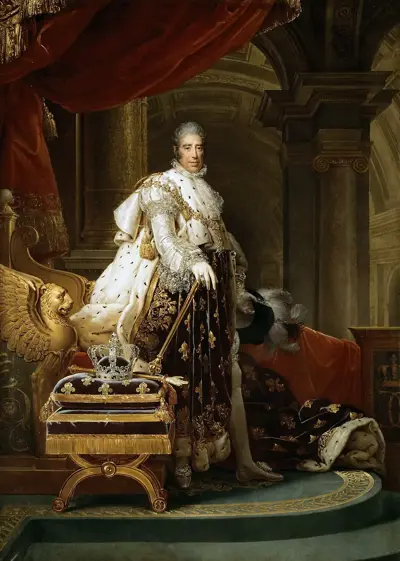
Charles X was King of France from 16 September 1824 until 2 August 1830. An uncle of the uncrowned Louis XVII and younger brother to reigning kings Louis XVI and Louis XVIII, he supported the latter in exile. After the Bourbon Restoration in 1814, Charles (as heir-presumptive) became the leader of the ultra-royalists, a radical monarchist faction within the French court that affirmed rule by divine right and opposed the concessions towards liberals and guarantees of civil liberties granted by the Charter of 1814. Charles gained influence within the French court after the assassination of his son Charles Ferdinand, Duke of Berry, in 1820 and eventually succeeded his brother in 1824.
