Philip Morin Freneau Quotes
To recommend what monarchies have done, They bring, for witness, David and his son; How one was brave, the other just and wise; And hence our plain Republics they despise; But mark how oft, to gratify their pride, The people suffered, and the people died; Though one was wise, and one Goliath slew, Kings are the choicest curse that man e’er knew!
Philip Morin Freneau, 1752-1832, Poet, Writer and State Department Official Quoted in “Hebraism and the Republican Turn of 1776: A Contemporary Account of the Debate over Common Sense”, William & Mary Quarterly, October 2013
Sourced by: Eigen's Political and Historical Quotations

While President Nixon and Henry Kissinger were putting all their eggs in the Shah’s basket, Simon was one of the government who had a different perception of our key ally. See {620093} for a CIA corroborating view.


Sir Walter was imprisoned in the Tower of London for 13 years, during which time he turned to historical pursuits.


The Priest was the right wing demagogic radio host of his day. Virulently anti-Semitic and anti-Black, he was threatened with excommunication by the Catholic Church, which finally ordered him to cease us weekly radio show and stop the political hate.


Napoleon had been a great supporter of Napoleon, but had become disillusioned.


Joseph ben Matthias. There a different kinds of theocracy, There can be a Pope, a King, or a Supreme Leader who acts as the chief magistrate using a religious tract as the law of the land. The Ancient Jews had a Republican Theocracy were the leaders were chosen by the people but they did not promulgate any laws. The Torah—the first 5 books of the Old Testament—was the law of the land. In comparison. 21st century Iran recognized the Koran as the source of Laws. However, their chief magistrate was a cleric—the supreme leader who is not elected but appointed by a few other clerics. None of the other Iranian leaders are chosen by the people because all candidates must be approved by the Supreme Leader in order to even stand for election. So the ancient Jews had a republican theocracy, while Iran was an autocratic theocracy.

This quotation is historically important because Davis clearly states the reason for the rebellion of the South. The anti-slave states were growing at a greater rate than the slave states and despite the greater voting power that a southerner had (a result of the 3/5 count of slaves for census purposes, and the Senate), the handwriting was on the wall and the majority of the United States was against the vicious institution of slavery and would make it unprofitable, impossible and/or illegal in the coming years. Southern slavery advocates saw this as a “tyranny of the majority” and therefore took up arms. In the early 20th century, apologists for the Southern rebellion tried to promote the idea that there were reasons other than slavery, but this quotation and the resolutions of the states who withdrew from the Union make it clear that the right to maintain slavery was the only significant issue. In that sense it was a States’ Rights issue, but the South was opposed to States’ Rights when it came to States refusing to return fugitive slaves when Federal Law required such under the Dred Scott Supreme Court Decision.

This quotation is a great demonstration of how much wiser and the better politician of all the crowned heads of Europe that Queen Victoria was. There were stirrings of freedom and desire for parliamentary government throughout Europe. Queen Victoria, even though and perhaps because she was a young woman, had a great feel for fairness and reasonableness and had read a great deal of history. There were some radical red socialists calling for complete radical revolution scaring European Royalty profoundly. They reacted very conservatively and with reaction, reverting to more tyrannical practices of the past urged in that path by very conservative, right wing advisors. Victoria also had little respect for some of the monarchs who had little interest in their people and much with their personal power and wealth. In the end, it was England which was the only nation which never had a serious radical socialist / communist threat, and that had much to do with Victoria’s political acumen and wisdom.
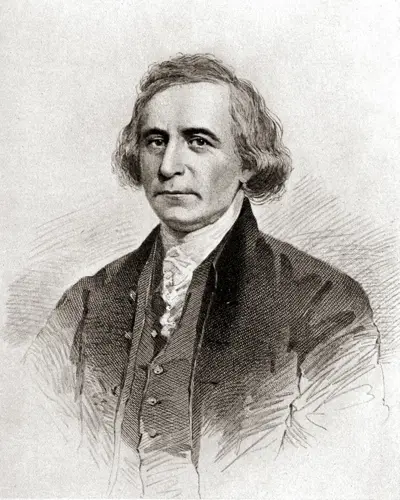
Philip Morin Freneau was an American poet, nationalist, polemicist, sea captain and newspaper editor sometimes called the "Poet of the American Revolution". Through his newspaper, the National Gazette, he was a strong critic of George Washington and a proponent of Jeffersonian policies.
