E. D. Morel Quotes
The Royal Megalomaniac
Edmond Morel, *, English Writer and Reformer, Reference to Belgian King Leopold II, 1835-1909
Sourced by: Eigen's Political and Historical Quotations


Nine years later he was responsible for Napoleon’s election as Consul.

Napoleon had been a great supporter of Napoleon, but had become disillusioned.

The Priest was the right wing demagogic radio host of his day. Virulently anti-Semitic and anti-Black, he was threatened with excommunication by the Catholic Church, which finally ordered him to cease us weekly radio show and stop the political hate.

While President Nixon and Henry Kissinger were putting all their eggs in the Shah’s basket, Simon was one of the government who had a different perception of our key ally. See {620093} for a CIA corroborating view.


Note that the Queen always used the 3rd person rather than the 1st when referring to herself. This was true of most of the leading public figures in England at the time. Although she detested Gladstone, she gained control of her feelings and did her duty and “sent for” him to form the Government. She was personally delighted when, as she predicted, his government then had political difficulties.


Power tends to corrupt, and absolute power corrupts absolutely. Great men are almost always bad men.
Perhaps the most famous quotation in all of Political Science is this one. What is fascinating is that 74 years earlier, Shelly, the most famous of the English Poets expressed the same idea in one of his great poems. See {627920}. The last sentence of this quote is often excluded.


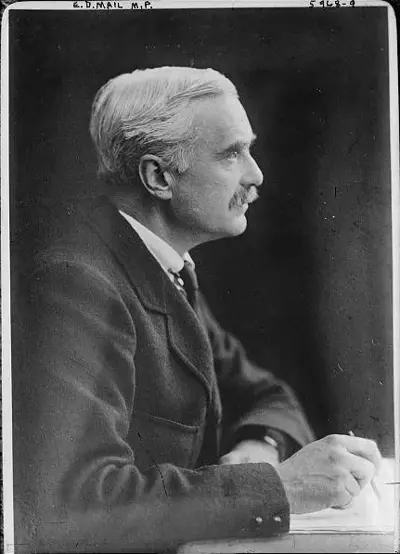
Edmund Dene Morel, originally Georges Eduard Pierre Achille Morel de Ville, was a British journalist, author, pacifist, and politician. In collaboration with Roger Casement, Morel led a campaign against slavery in the Congo Free State, founding the Congo Reform Association and running the West African Mail. He played a significant role in the British pacifist movement during the First World War, participating in the foundation and becoming secretary of the Union of Democratic Control, at which point he broke with the Liberal Party. After the war he joined the Independent Labour Party. Bertrand Russell said of Morel, "No other man known to me has had the same heroic simplicity in pursuing and proclaiming political truth."[
