Charles II Quotes
You had better have one King than five hundred.
Charles II, 1630-1685, King of Great Britain & Ireland, Statement, March 28, 1681
Sourced by: Eigen's Political and Historical Quotations


Sir Walter was imprisoned in the Tower of London for 13 years, during which time he turned to historical pursuits.

Your ideas of democracy are The Zemstvos had come to plead for reforms from the young Czar who most Russians hoped would be more modern than his all-powerful and dictatorial father. In a sense, it was this quotation that drove many moderate Russians to the radical side, and the quotation was used as a recruiting toll by both the Communist and non-Communist anti-Czarist Russians.


England had, under Henry VIII, left the Roman Catholic Church where the King replaced the Pope as head of the English Church. Henry’s successors then had to organize and manage the national Christian church. James was discussing the hierarchy of the Church of England and there was a suggestion that Bishops be eliminated and have every priest directly responsible to the crown. Bishops would be powerful figures who might form a power center. (They did later). However, King James I observed that the King is God’s choice and rules by divine right. So there had to be bishops to crown kings. The bishoprics were retained.


Tonga was one of the few nations controlled by a king.

Honore Gabriel Victor Requiti. The French King had just opened the French National Assembly which contained deputies (delegates) from the clergy, the nobility and the people. The King had made what some deputies thought was a very constructive and responsible speech opening the assembly. Mirabeau observed that as long as there was an absolute monarch in place, even a benign one. It was the presence of a monarch itself that was evil.


Napoleon had been a great supporter of Napoleon, but had become disillusioned.


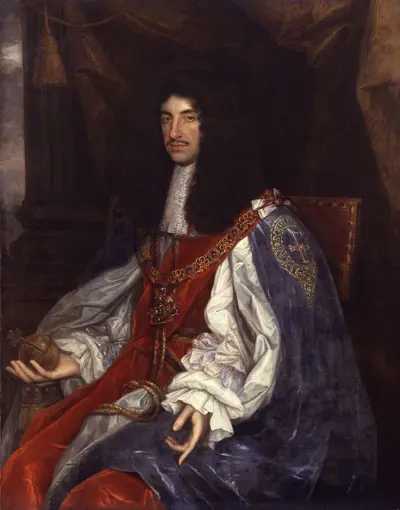
Charles II was King of Scotland from 1649 until 1651, and King of Scotland, England and Ireland from the 1660 Restoration of the monarchy until his death in 1685.
