Walter Bagehot Quotes
The Sovereign has, under a constitutional monarchy such as ours, three rights—the right to be consulted, the right to encourage, the right to warn.
Walter Bagehot, 1826-1877, British Economist & Writer, The English Constitution, ‘The Monarchy’
Sourced by: Eigen's Political and Historical Quotations

This was written shortly before he assumed the crown.

Some of the Patriots of Early America realized that the oppressions of British rule were coming from Parliament and initially took the position that only the King could make laws for the colonies and not Parliament. Therefore, they were as Englishmen challenging illegal English laws. Most American hostility was directed at Parliament and not the King. However, once there was any physical resistance, King George came down with such a heavy hand that American hatred transferred to him. For related quotes on the King/Parliament issue, see {639145}, {639144}, {639142}, {639141}, {639140}, & {639137}

Many American colonists had relatives and friends in England, and Paine argued that American independence would help and not het the English people.
The statement so offended the Lords—the highest court of England—that he was imprisoned by the Lords and not released until he had recanted the position. The argument goes on today in many countries incuding the United States.


She responded to the Lord Chief Justice and to Lord Cecil and asked them to so inform the Commons and the House of Lords. Cecil needed three drafts to convey the response but tone it down a little, thus performing the duties of a modern press secretary.

After the King’s appointment in 1921 she “advised” him on establishing this regime and operating the government. At a time that women could not even vote in England, Bell was a kingmaker and major power in an area of the world that was much more sexist than England at the time.


This Cahier was the consensus of the Clergy of Blois in 1789. There were cahiers of several provinces of France—some by the clergy, some by the nobles. What is fascinating is the emergence of many of the pre-revolutionary French concepts. The example of the American revolution and its principles was known throughout the educated classes of France.

She was 18 years old at the time. She was England’s longest reigning monarch and a model studied by other monarchs, the world over.
West Saxons had a bad experience with a “Queen” who was not very good. This quotation illustrates that the institutions of monarchy varied from time to time and place to place, just like democracies that have many differences among them.

What Alcuin did not say was that Charlemagne had the largest and most powerful army.

Some of the Patriots of Early America realized that the oppressions of British rule were coming from Parliament and initially took the position that only the King could make laws for the colonies and not Parliament. Therefore, they were as Englishmen challenging illegal English laws. Most American hostility was directed at Parliament and not the King. However, once there was any physical resistance, King George came down with such a heavy hand that American hatred transferred to him. For related quotes on the King/Parliament issue, see {639145}, {639143}, {639142}, {639141}, {639140}, & {639137}


This absolute ruler concluded that single person judgment with advisors has not as sound as a system of open discussion and institutions affecting policy decisions and administration. She herself had made errors and admitted it—see {641730}.

Elected at 24 as the youngest British Prime Minister. He was arguing for a motion of censure of the government of Lord North


This was a prevailing philosophical view in England and other monarchies. American Founding Fathers were quite familiar with Hobbes’ works and views and many specifically rejected it. Some of the Federalists wanted to extend some of the traditional prerogatives of monarchy to the American Presidency while the Jeffersonian Republican Democrats wanted the executive treated like any, one else before the law. Today that view generally holds, but there is a vestige of the Hobbes’ view still present in things like Executive Privilege.
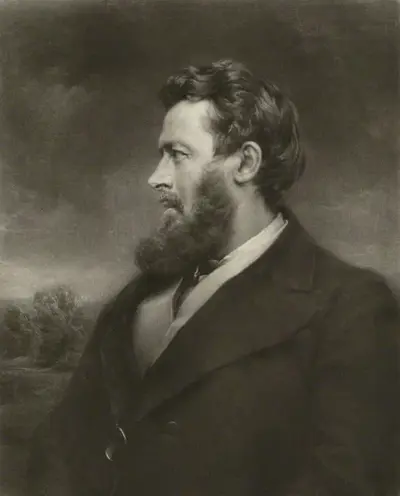
Walter Bagehot was a British journalist, businessman, and essayist, who wrote extensively about government, economics, literature and race.
