Elizabeth I Quotes
Your petition is to deal in the limitation of the succession. At this present it is not convenient, nor never shall be without some peril unto you, and certain danger unto me. But as soon as there may be a convenient time and that it may be done with least peril unto you, although never without great danger unto me, I will deal therein for your safety and offer it unto you as your prince and head without requests. For it is monstrous that the feet should direct the head.
She responded to the Lord Chief Justice and to Lord Cecil and asked them to so inform the Commons and the House of Lords. Cecil needed three drafts to convey the response but tone it down a little, thus performing the duties of a modern press secretary.
Elizabeth I, 1533-1603, Queen of England, Response to a Parliamentary Delegation who had wanted her to deal with the issue of succession to the throne, 1566
Sourced by: Eigen's Political and Historical Quotations


King Henry VII had only 1 son, Edward who became king at age 9. But at the age 15 he became very ill and died with no children. Before his death however, Mary who would normally have been the next in line was a Catholic and Northumberland, the head of the Privy Counselor, and father of Jane’s Husband arranged for Edward to change his will before he died. Jane Grey riled for 9 days. Parliament then made Mary the Queen.

In the British Constitutional Monarchy of the Victorian Era, the Queen still possessed enormous power and many in Parliament was constantly trying to have Parliament assume many of the Queen’s powers. The Prime Minister was in an awkward position. On the one hand, he was the Queen’s Prime Minister and leader of HER government. At the same time he was the leader of the political party that had won the last Parliamentary election. His party was trying to usurp some of the Queen’s powers and Peel explained to the Queen’s assistant that he would generally side with the Queen against his own party. It is doubtful that Anson and the Queen believed Peel on this point as his position as Prime Minister depended not on his being elected by the voters but by his party members of Parliament. In modern times, the British monarch has few real powers but is still very influential so there are no struggles over power with Parliament.

Some of the Patriots of Early America realized that the oppressions of British rule were coming from Parliament and initially took the position that only the King could make laws for the colonies and not Parliament. Therefore, they were as Englishmen challenging illegal English laws. Most American hostility was directed at Parliament and not the King. However, once there was any physical resistance, King George came down with such a heavy hand that American hatred transferred to him. For related quotes on the King/Parliament issue, see {639145}, {639144}, {639142}, {639141}, {639140}, & {639137}

He had tripled the size of Rus, pulling together the disparate areas which had been under the thrall of the Golden Horde. The custom was when the Grand Prince died he left parts of his dominion to each of his sons and grandsons. However. Ivan changed that pattern and wanted one son to be the ruler over all of what was becoming a large unified state. After that his pattern was followed by all the Czars until the Russian Communist Revolution in 1917." Ivan the Great


England had gone through a bloody Civil War with the Parliament on one side and the King on the other. The King lost and was beheaded later that year. See {597353}.
This was Executive Privilege of the time. The result of this type of conflict between the executive and the legislative body was a Civil War in which Parliament won. This concept of executive privilege operates to this day in America where the President typically refuses to have his special assistants and staff be questioned by Congressional investigating committees. IT also extends to documents where the President has refused to allow Congress access to papers. In the Watergate scandal, it was the Supreme Court Decision that President Nixon could not claim Executive Privilege with respect to the Watergate tapes. Their exposure forced his resignation.

This was written shortly before he assumed the crown.


Actually, Queen Elisabeth II, at that time the Queen of England, was very sophisticated about the policies of the nation. Chomsky’s point was not that the Queen was ignorant; it was that her role is ceremonial and it is not critical or even material that the monarch in a Constitutional Democracy understands or approves of the government program that is being presented.

The king would often walk alone or with only a few companions. His brother expressed concern about exposing the royal person to risk.
The statement so offended the Lords—the highest court of England—that he was imprisoned by the Lords and not released until he had recanted the position. The argument goes on today in many countries incuding the United States.


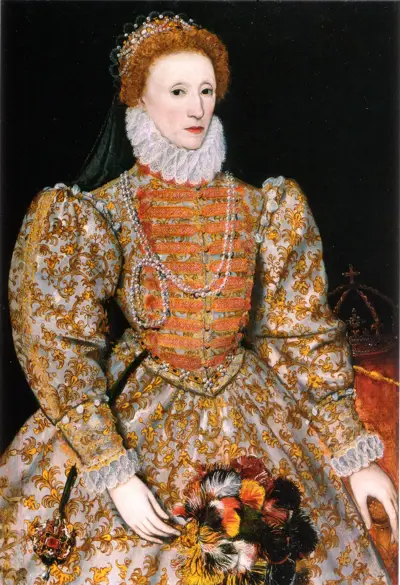
Elizabeth I was Queen of England and Ireland from 17 November 1558 until her death in 1603. Sometimes called the Virgin Queen, Gloriana or Good Queen Bess, Elizabeth was the last of the five monarchs of the House of Tudor.
