Empress Dowager Cixi Quotes
England is one if the great powers of the world, but this has not been brought about by Queen Victoria’s absolute rule. She had able men of Parliament back of her at all times and of course the discussed everything until the best result was obtained ... In China, I have 400 million people, all dependent on my judgement.
This absolute ruler concluded that single person judgment with advisors has not as sound as a system of open discussion and institutions affecting policy decisions and administration. She herself had made errors and admitted it—see {641730}.
Cixi, 1835–1908, Empress Dowager of China, 1905
Sourced by: Eigen's Political and Historical Quotations

See {641838} for a quote about the policies that she came to regret.

After the King’s appointment in 1921 she “advised” him on establishing this regime and operating the government. At a time that women could not even vote in England, Bell was a kingmaker and major power in an area of the world that was much more sexist than England at the time.


The statement so offended the Lords—the highest court of England—that he was imprisoned by the Lords and not released until he had recanted the position. The argument goes on today in many countries incuding the United States.


This was written shortly before he assumed the crown.


Elected at 24 as the youngest British Prime Minister. He was arguing for a motion of censure of the government of Lord North
Indeed she did. In actuality, she was the ruler of the largest nation on Earth. However, she was not a very clever ruler and actually was responsible for keeping China very backward and weak because she was convinced that China was the most advanced of nations and very strong. Therefore nothing should be changed. Over 5 decades with no change is sure to make a nation backward, even if it started as advanced. See {620090}.

At the time there was no concept of serious separation of powers. For all practical purposes, the King ruled and he shared some of his powers with the Parliament. The next centuries in England would see the great battle for governmental power between the monarch and the Parliament. Today, the British monarch has no power but still retains a great deal of influence in England but largely because Queen Elisabeth is so well loved and respected.

In the British Constitutional Monarchy of the Victorian Era, the Queen still possessed enormous power and many in Parliament was constantly trying to have Parliament assume many of the Queen’s powers. The Prime Minister was in an awkward position. On the one hand, he was the Queen’s Prime Minister and leader of HER government. At the same time he was the leader of the political party that had won the last Parliamentary election. His party was trying to usurp some of the Queen’s powers and Peel explained to the Queen’s assistant that he would generally side with the Queen against his own party. It is doubtful that Anson and the Queen believed Peel on this point as his position as Prime Minister depended not on his being elected by the voters but by his party members of Parliament. In modern times, the British monarch has few real powers but is still very influential so there are no struggles over power with Parliament.


the power a ruler or a ruling class
Some of the Patriots of Early America realized that the oppressions of British rule were coming from Parliament and initially took the position that only the King could make laws for the colonies and not Parliament. Therefore, they were as Englishmen challenging illegal English laws. Most American hostility was directed at Parliament and not the King. However, once there was any physical resistance, King George came down with such a heavy hand that American hatred transferred to him. For related quotes on the King/Parliament issue, see {639145}, {639144}, {639142}, {639141}, {639140}, & {639137}

Some of the Patriots of Early America realized that the oppressions of British rule were coming from Parliament and initially took the position that only the King could make laws for the colonies and not Parliament. Therefore, they were as Englishmen challenging illegal English laws. Most American hostility was directed at Parliament and not the King. However, once there was any physical resistance, King George came down with such a heavy hand that American hatred transferred to him. For related quotes on the King/Parliament issue, see {639145}, {639143}, {639142}, {639141}, {639140}, & {639137}


Actually, Queen Elisabeth II, at that time the Queen of England, was very sophisticated about the policies of the nation. Chomsky’s point was not that the Queen was ignorant; it was that her role is ceremonial and it is not critical or even material that the monarch in a Constitutional Democracy understands or approves of the government program that is being presented.


Prior to Cooke’s indictment of English King Charles I, there was a concept of Royal Impunity—that a sovereign could not legally be called to account for his actions as ruler of the state. The concept of “sovereign immunity” was a concept where the sovereign and his agents could be given immunity for specific actions, but they never would have impunity again where there were no limits to the crimes they might commit against their own people. Charles I refused to even recognize Cooke’s indictment and so have heads of state called to account for their major crimes since then all the way down to Saddam Hussein in 2006 who made the same argument. Cooke was himself hanged, drawn and quartered almost 20 years after the Charles I trial for his part in the “Regicide” so the concept of Royal Impunity did not die quickly.

Charles I was tried by Parliament but at the time there was the concept of Royal Impunity and there was no existing crime that he could be charged with despite the murder of many of his citizens. Cooke established the legal precedent making Tyranny a crime. See {624032}.


1st Earl of Beaconsfield

Carlyle was of the opinion that legislators do not make good executives, managers, or leaders. Many in modern America agree.
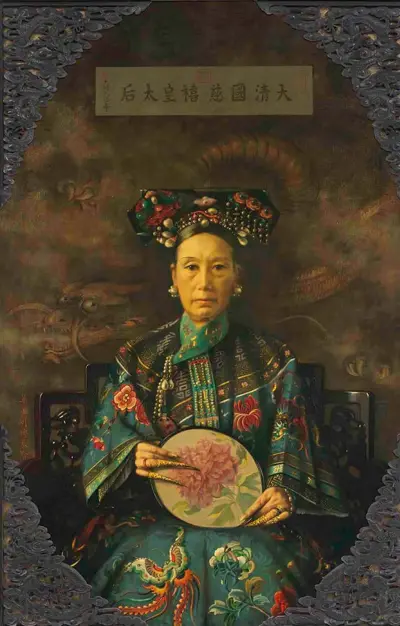
- Born: November 29, 1835
- Died: November 15, 1908
- Nationality: Chinese
- Profession: Noblewoman
Empress Dowager Cixi was a Chinese empress dowager and regent who was the de facto supreme ruler of China in the late Qing dynasty for 47 years, from 1861 until her death in 1908. Of the Manchu Yehe Nara clan, she was elected as a concubine of the Xianfeng Emperor in her adolescence and gave birth to a son, Zaichun, in 1856. After the Xianfeng Emperor's death in 1861, the young boy became the Tongzhi Emperor, and she became the Empress Dowager. Cixi ousted a group of regents appointed by the late emperor and assumed regency, which she shared with Empress Dowager Ci'an. Cixi then consolidated control over the dynasty when she installed her nephew as the Guangxu Emperor at the death of the Tongzhi Emperor in 1875, contrary to the traditional rules of succession of the Qing dynasty that had ruled China since 1644.
