James Mill Quotes
How is it the community can check ? The community can act only when assembled; and when assembled, it is incapable of acting. The community, however, can choose representatives.
the power a ruler or a ruling class
James Mill, 1773–1836, Scottish historian, economist, political theorist, and philosopher, Father of John Stuart Mill, Essays on Government, etc., 1828
Sourced by: Eigen's Political and Historical Quotations


This was his version of the governing body of a republican commonwealth. His assumption was that the ablest men would be the nobility, the educated and religious (Catholic) elite.

Meiji the Great. “Public Opinion” had the same meaning for the Japanese of this time as modern Western democracies perceive it with one exception. The public did not include all; it included only landlords— who owned land and had peasants on it. However, even asking them was an incredible step forward. The Emperor even sent formal written surveys to the landlords and in that sense, Japanese methodology of ascertaining public opinion was far ahead of the West. These reforms were opposed by the nobility and later the military, and by the 1930s there was no semblance of democracy left in Japan.


Some people think that this quotation was partially copied from Lincoln’s Gettysburg Address. However, he gave this speech more than a decade earlier. Lincoln might have been familiar with it. His statue is in the U. S. Capitol.


Declaration of Humanity. Printed in Japanese Newspapers. Contrast this with the previous Japanese political leadership tradition as {43746}


At the time the power and prestige of Congress relative to the Presidency , was much greater than it is today. It was McKinley’s successor, Theodore Roosevelt, who began a 20th century trend which led to a reversal of the relationship between the Executive Branch and the Legislative.

There was a belief among some anti-Federalists that the people lost their power by electing representatives and not having a direct democracy as in many New England communities. Ames gave the counter argument.


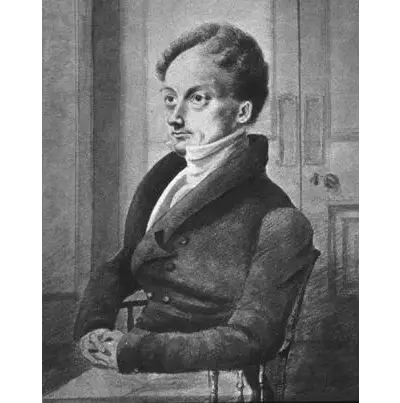
James Mill was a Scottish historian, economist, political theorist, and philosopher. He is counted among the founders of the Ricardian school of economics. He also wrote the monumental work The History of British India. He was the first writer to divide Indian history into three parts: Hindu, Muslim and British, a classification which has proved surpassingly influential in the field of Indian historical studies, but which is seen in recent decades as being deeply problematic.
