John Milton Quotes
… a permanent Council of the ablest men chosen by the people
This was his version of the governing body of a republican commonwealth. His assumption was that the ablest men would be the nobility, the educated and religious (Catholic) elite.
John Milton, 1608-1674, English Writer, Ready and Easy Way to Establish a Free Commonwealth, 1659
Sourced by: Eigen's Political and Historical Quotations


the power a ruler or a ruling class

The government relationship to people phrase, although probably Lincoln's most famous, was not totally original. John Adams came close in a 1774 proclamation. As did John Marshall in his McCulloch v. Maryland decision. Daniel Webster's Speech on Foot's Resolution was very close. as was Theodore Parker in 1850 {629578}. There was also Thomas Cooper in 1795. But the earliest appears to be John Wycliffe in 1382 {567292}. It is not known with which of these Lincoln was familiar.

Some people think that this quotation was partially copied from Lincoln’s Gettysburg Address. However, he gave this speech more than a decade earlier. Lincoln might have been familiar with it. His statue is in the U. S. Capitol.

Note the similarity to Lincoln who Ataturk very much admired.


After the many years of the Cold War attacking of Democracy, for many Russians the word conveys a bad image of their old enemy. For others, using the word reminds them that the Soviet Union collapsed and the Russians lost the cold war—an unpleasant memory. Yet many of the leaders of the Russian Federation very much wanted to democratize Russia. Bushmin had this very practical, albeit humorous, solution.

A major problem of new and emerging democracies is that many people believe that majority rule per se is democracy. In Egypt for example, Morsi and his Muslim Brotherhood won the election. They then assumed that they had the right to do anything including exempting the government from judicial review or deciding the role of women in society or denying freedom of religion to non-Muslim citizens. Democracy is not a serial autocracy with each new autocrat being selected by a free and fair election.

This constitution, 13 years later, became the basis for the national Batavian Constitution.

Meiji the Great. “Public Opinion” had the same meaning for the Japanese of this time as modern Western democracies perceive it with one exception. The public did not include all; it included only landlords— who owned land and had peasants on it. However, even asking them was an incredible step forward. The Emperor even sent formal written surveys to the landlords and in that sense, Japanese methodology of ascertaining public opinion was far ahead of the West. These reforms were opposed by the nobility and later the military, and by the 1930s there was no semblance of democracy left in Japan.

The only soldier ever so honored. At the beginning of WWII, President Roosevelt and Churchill wanted the U. S. Army to invade German and Italian North Africa. Marshall, General Eisenhower, and all the other military men, advised that while it was possible, it would be a diversion from the strategic objective of invading Europe. None the less FDR ordered the invasion. The effect on the American people was wonderful, It showed that the Germans were not invincible, increased enlistment and morale at home, and developed more popular support for the war. Later, Marshall learned much about Democratic leadership and he, himself became a very effective government leader, and began to appreciate FDR’s approach but with a little cynicism about democracy.


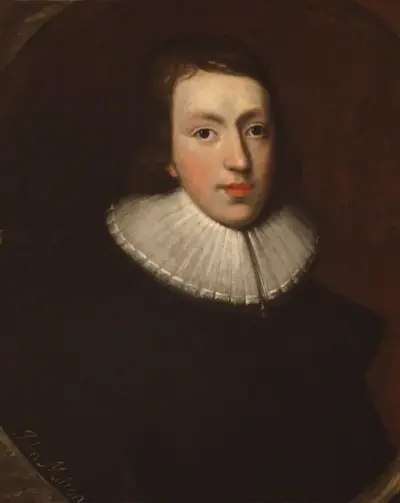
John Milton was an English poet and intellectual who served as a civil servant for the Commonwealth of England under its Council of State and later under Oliver Cromwell. He wrote at a time of religious shifts and political instability, and is best known for his epic poem Paradise Lost (1667). Written in blank verse, Paradise Lost is widely considered to be one of the greatest works of literature ever written.
