JOHN COTTON
Commenting on the concept of democracy and it's lack of Biblical justification:
These appear to be the first economic regulations of New England. Note that although there was a Governor of the Colony, such economic issues were considered to be fundamentally religious in nature. Therefore Cotton—the leading cleric of the colony—was called upon to in effect legislate on the subject. Ironically, this is not terribly different from the theocracy in Iran or some other Muslim countries of today where like some of the early American Colonies, there was no separation of church and state.
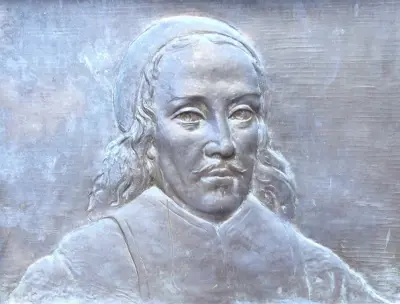
John Cotton was a clergyman in England and the American colonies and was considered the preeminent minister and theologian of the Massachusetts Bay Colony. He studied for five years at Trinity College, Cambridge, and another nine at Emmanuel College, Cambridge. He had already built a reputation as a scholar and outstanding preacher when he accepted the position of minister at St. Botolph's Church, Boston in Lincolnshire, in 1612. As a Puritan, he wanted to do away with the ceremony and vestments associated with the established Church of England and to preach in a simpler manner. He felt that the English church needed significant reforms, but he was adamant about not separating from it; his preference was to change it from within.
