John Cotton Quotes
God's institutions (such as the government of church and of commonwealth be) may be close and compact, and co-ordinate one to another, and yet not confounded.
John Cotton, 1585-1652, New England Puritan Clergyman, Letter to Lord Say and Sele, 1636
Sourced by: Eigen's Political and Historical Quotations

Spinoza’s ideas were considered so radical and dangerous that he was the only man in history who was excommunicated by the Catholics, the Jews and the Muslims. This quotation, in the 17th century outraged almost every cleric. This is one of the strongest and unequivocal statements about the desirability of separation of church and state. Interestingly, as early as this statement was, Spinoza believed that harm extended to both religion and government.


The treaty, which was also ratified by the Senate, was actually drafted by Joel Barlow, the U. S. Consul in Tripoli. It was the first official statement of the United States on its religious basis or lack thereof.


Pen name: Jack Nipps


These appear to be the first economic regulations of New England. Note that although there was a Governor of the Colony, such economic issues were considered to be fundamentally religious in nature. Therefore Cotton—the leading cleric of the colony—was called upon to in effect legislate on the subject. Ironically, this is not terribly different from the theocracy in Iran or some other Muslim countries of today where like some of the early American Colonies, there was no separation of church and state.

Carroll was writing to Troy during the time of the question of Catholic emancipation in England. Here he is clearly alluding to the British form of government. Carroll never missed the opportunity to champion religious freedom as manifested in the U.S. Constitution. For an earlier example of his praise for religious freedom, see {596933}.

Backus was the first of the American clerics to espouse the position that in order for there to be a Christian nation, the state must be separate from the Church.


While most American leaders in 1776 advocated separation of church and state, others did not. There probably has been no better statement for religion in government than this one. Essentially, this view has been held by orthodox Christians, Jews, Muslims and has been at the heart of every theocracy such as Iran.

Adventists, like Jews and other groups believe that Sunday was the first Biblical day, and Saturday, the 7th and the Sabbath. Senator Blair had introduced a bill to make Sunday, the National Sabbath and require that all respect it. It was fought by the Adventists and others.


This is a very important quotation. It is the first American expression of the “wall of separation” concept between church and state.

Of all the Western Colonial Powers, Spain was the worst. They took the most from their possessions and contributed the least. Worst, they killed off almost all the indigenous people.


Ingersoll was considered to be the greatest orator and political thinker of his day, but his overt atheistic views curtailed his elected political career.


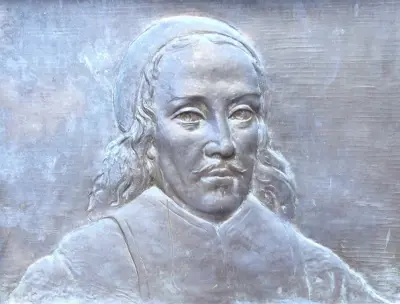
John Cotton was a clergyman in England and the American colonies and was considered the preeminent minister and theologian of the Massachusetts Bay Colony. He studied for five years at Trinity College, Cambridge, and another nine at Emmanuel College, Cambridge. He had already built a reputation as a scholar and outstanding preacher when he accepted the position of minister at St. Botolph's Church, Boston in Lincolnshire, in 1612. As a Puritan, he wanted to do away with the ceremony and vestments associated with the established Church of England and to preach in a simpler manner. He felt that the English church needed significant reforms, but he was adamant about not separating from it; his preference was to change it from within.
