Articles of Confederation Quotes
The Great Governor of the World.
Articles of Confederation, Reference to God, 1781
Sourced by: Eigen's Political and Historical Quotations


She was running for the United States Senate. God must have chosen her opponent as she lost.


Here we have an example of a government that tried to go into the Religion business. They wanted Christian religion but not the Catholic Church which at the time was the only Christian church. Many of the most extreme French revolutionists had a problem with religion. They were personally believers and recognized that most French people were. But the organized Roman Catholic Church was a major ally and supporter of the hated monarchy, and at the time was extremely corrupt at the expense of the people. The nobility were also the highest officials of the church in France. One solution they tried was to have the “people’s government” establish days and methods of worship, an effort that in retrospect appears ludicrous to us today.

The political control technique of establishing a religion where by God himself ordains the ruler was not unique to the Christians and Muslims. The technique was also used in the Inca Empire of Peru. The first Inca who came up with this creative theocratic concept did so in about 1200.


The Emperor, who had persecuted many Christians by blinding them was himself going blind from an eye disease. He sought pardon from the Christians and their God. This statement he gave before the Christian bishops.


Backus was the first of the American clerics to espouse the position that in order for there to be a Christian nation, the state must be separate from the Church.
Hizb ut-Tahrir is a “worldwide Islamic political party.” It is banned as a terrorist, violence provoking institution in most of the Muslim countries and many nations in Europe.

This verse has been one of the bases of Muslim theocratic states like Iran’s claim to legitimacy.

Judge Moore was trying to justify oaths to God or other state references to a Judeo-Christian God as not violating the 1st Amendment stricture about the government endorsing a particular religion. Note however his {33827} quotation.
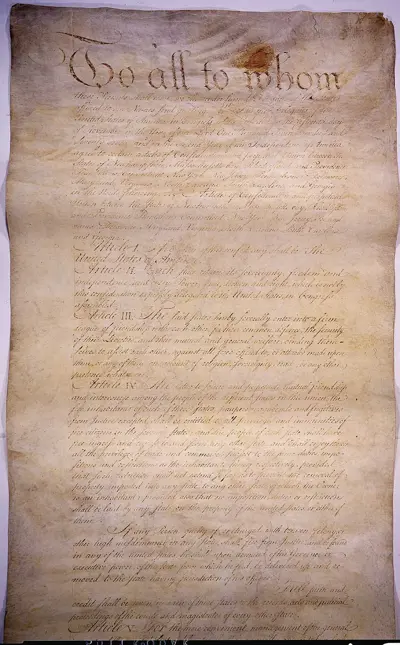
The Articles of Confederation and Perpetual Union was an agreement among the 13 original states of the United States of America that served as its first constitution. It was approved after much debate by the Second Continental Congress on November 15, 1777 and sent to the states for ratification. The Articles of Confederation came into force on March 1, 1781, after ratification by all the states. A guiding principle of the Articles was to preserve the independence and sovereignty of the states. The weak central government established by the Articles received only those powers which the former colonies had recognized as belonging to king and parliament.
