John Cotton Quotes
A man may not sell above the current price, i.e., such a price as is usual in the time and place, and as another (who knows the worth of the commodity) would give for it When a man loseth in his commodity for want of skill, etc., he must look at it as his own fault or cross, and therefore must not lay it upon another
These appear to be the first economic regulations of New England. Note that although there was a Governor of the Colony, such economic issues were considered to be fundamentally religious in nature. Therefore Cotton—the leading cleric of the colony—was called upon to in effect legislate on the subject. Ironically, this is not terribly different from the theocracy in Iran or some other Muslim countries of today where like some of the early American Colonies, there was no separation of church and state.
John Cotton, 1585-1652, New England Puritan Clergyman, Principles and guidance given in the case of Robert Keaine, who was censured and fined, September 9, 1639
Sourced by: Eigen's Political and Historical Quotations

The Black Plague, which raged in Europe from 1347 to 1349, had left relatively few able bodied people alive. Given this shortage of labor there was a rapid inflation, especially to the distress of the landed class who had to pay much more for their food. The king therefore established what amounted to price controls, wage controls and forces labor. See {611125} and {611126}


Manava Dharma Shastra. Ancient Hindu India had what may well have been the most regulated mercantile economy of any society in history. All prices for all goods were to be set by the king. In order to prevent the stultifying effect of price controls, the Hindus required that the prices be reset very frequently to reflect various market conditions. It was a highly regulated form of capitalism. This text is a part of the Hindu Holy Texts. Hindus believe that Manu was a prophet whose text is revealed or inspired.


This Hadith together with the Prophet’s probation on interest appears to preclude a capitalistic economic structure. However, Muslim institutions have been very creative in interpreting these admonitions. Some Muslims give this a modern interpretation which prohibits price gouging but not fair profit. Regardless, it has always been interpreted to apply only to business transactions between Muslims. Profit can be made on trading and commerce with non-Muslims, and Muslim traders have always spanned the globe.
Collection of Spoken Words of the Prophet. Ironically, despite the reverence with which words of the Hadith are accorded in Islam, from time to time Muslim theologians and authorities have attempted to establish “fair prices” despite this free market view of the Prophet.


Lock’s view differs from modern American business ethics and law. He argues that regardless of circumstances a merchant may charge anything and that all consumers must be treated equally, which would eliminate preferred customers or even automobile sales practices where prices are negotiated for most vehicles. See {616334} to see how he deals with necessities of life: as issues of charity—not economics.


Whenever price controls have been tried, there always seems to develop a black market. However, some argue that price controls can work very well for a modest period of time in a national emergency and give WWII as an example. Although there was a black market, very few Americans participated in it, and the effect was positive as a result of the patriotism that was so keenly felt by most Americans at that time. Further, capital punishment has rarely worked to prevent any illegal activity. In London, pickpockets were publicly hung while other pickpockets fleeced the crowd watching the hanging ostensibly to dissuade people from pickpocketing.


She was then the European Commissioner for Competition.


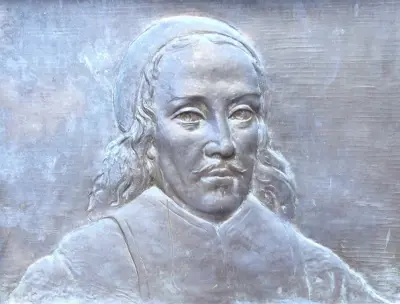
John Cotton was a clergyman in England and the American colonies and was considered the preeminent minister and theologian of the Massachusetts Bay Colony. He studied for five years at Trinity College, Cambridge, and another nine at Emmanuel College, Cambridge. He had already built a reputation as a scholar and outstanding preacher when he accepted the position of minister at St. Botolph's Church, Boston in Lincolnshire, in 1612. As a Puritan, he wanted to do away with the ceremony and vestments associated with the established Church of England and to preach in a simpler manner. He felt that the English church needed significant reforms, but he was adamant about not separating from it; his preference was to change it from within.
