Wendell Willkie Quotes
Business, too, need to mend its ways. For many years various sections of American industry have asked for special legislation which offered a temporary benefit at the expense of normal economic processes. Business has asked for special subsidies and special tariffs, for special protection against price cutters or low cost producers, for government appropriations for this or that special purpose. Business cannot ask for government interference at one time, and then indignantly reject it at another.
Wendell Wilkie, 1892-1944, Republican candidate for President (IN), Speech, 44th Congress of American Industry, December 8, 1939
Sourced by: Eigen's Political and Historical Quotations


During The Depression although business in general was doing very poorly, there were a few which had grown immensely powerful and abused the power as there was little or no regulation at the time.

Professor Epstein is a libertarian free market economist who advocates patience even if there are clear problems like corruption, unsafe working conditions, and the like. This view holds that the free market will sort itself out more effectively than the government will be able to do. Others, disagree.

Brandeis was U. S. Supreme Court Justice Louis D. Brandeis, 1856-1941, who wrote that competition would control prices if only healthy competition could be maintained—the problem was resolved by both increasing competition and much more stringent regulation of corporations.

These appear to be the first economic regulations of New England. Note that although there was a Governor of the Colony, such economic issues were considered to be fundamentally religious in nature. Therefore Cotton—the leading cleric of the colony—was called upon to in effect legislate on the subject. Ironically, this is not terribly different from the theocracy in Iran or some other Muslim countries of today where like some of the early American Colonies, there was no separation of church and state.


Whenever price controls have been tried, there always seems to develop a black market. However, some argue that price controls can work very well for a modest period of time in a national emergency and give WWII as an example. Although there was a black market, very few Americans participated in it, and the effect was positive as a result of the patriotism that was so keenly felt by most Americans at that time. Further, capital punishment has rarely worked to prevent any illegal activity. In London, pickpockets were publicly hung while other pickpockets fleeced the crowd watching the hanging ostensibly to dissuade people from pickpocketing.

This Republican mantra has been central for the Republicans for the entire century after Theodore Roosevelt who thought that business had to be regulated and controlled. The same basic speech has been given by conservative Republicans ever since.

in the Meltdown of 2008 Gramm was one of the most ideological deregulators in Congress. As the Meltdown of 2008 hit, he immediately made this statement when few people even knew the extent of what had happened, much less why it happened. Gramm’s instant absolution of deregulation as one of the causes is a classic case of denial. There were few economic issues of controversy that did not contribute to the totality of causes. And a few years later Gramm was one of the very few ideologues who still believed that deregulation did not have a role in the Meltdown and the Great Recession that followed. For a contrast from the expert in his own party, see {638023}.

He and his brother were the largest political contributors in the United States, so they had enormous influence on Republicans (they only made political contributions to conservative organizations).
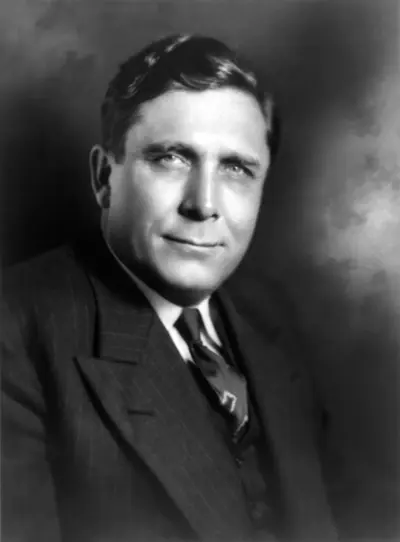
Wendell Lewis Willkie was an American lawyer, corporate executive, and the 1940 Republican nominee for President of the United States. Willkie appealed to many convention delegates as the Republican field's only interventionist: although the U.S. remained neutral prior to Pearl Harbor, he favored greater U.S. involvement in World War II to support Britain and other Allies. His Democratic opponent, incumbent President Franklin D. Roosevelt, won the 1940 election with about 55% of the popular vote and took the electoral college vote by a wide margin.
