David Blunkett Quotes
Let's not allow the voice of the people to be overwhelmed by the siren song of those who opposed regulation, who demanded that government should stand aside and let finance and business run the show.
Blunkett, David. "Opinion." The Guardian, Guardian News & Media, 2009.


Whenever price controls have been tried, there always seems to develop a black market. However, some argue that price controls can work very well for a modest period of time in a national emergency and give WWII as an example. Although there was a black market, very few Americans participated in it, and the effect was positive as a result of the patriotism that was so keenly felt by most Americans at that time. Further, capital punishment has rarely worked to prevent any illegal activity. In London, pickpockets were publicly hung while other pickpockets fleeced the crowd watching the hanging ostensibly to dissuade people from pickpocketing.
Mises observes the classic philosophical quandary of business and commerce. If we cannot leave everything to the market place and the capitalists and entrepreneurs because they are morally and ethically fallible, will not the government people who regulate and control them be equally moral and fallible? Mises critics point out that Mises misses the difference in a democracy, that if fallible businessmen err, all can suffer and their personal vested interests do not necessarily coincide with the interests of the majority in general. If the government representative of the majority are fallible and err, the majority can correct them and if the majority does not, the people have undone themselves and have not been the victims of the foibles of a few privileged people in the society. Mises argues that it is the minority who, if left alone, would produce the best standard of living for the majority who should exercise they right to regulation only by their acts as consumers.


During The Depression although business in general was doing very poorly, there were a few which had grown immensely powerful and abused the power as there was little or no regulation at the time.


The President had decided to aggressively push for railroad regulation to end the rate rebate abuses that were used to support the monopolies like Standard Oil. In vintage Roosevelt tactics, he gave his first major speech on the subject in the setting and forum that would be most opposed to it. The Union League Club of Philadelphia in included the wealthiest men in the area where were most opposed to any Federal Regulation of anything. All the major railroad executives and stock owners and traders were also members. The President wanted to persuade the opponents to change their positions, and sometimes he did. He also was driven by his concept of sports and athletics so that the “opposition” should have “fair notice” for the contest ahead.


The “rebate agony” referred to a corrupt practice of the Railroads and the Large Monopolies. The railroads charged a very high rate for the transportation of important products like beef and oil. However, secretly they gave back a large percentage of the transportation rate charged to the trusts. They in turn could cut their prices and undersell all the smaller competitors who were paying “full freight” and could not afford to match the lower price. As soon as the smaller competitors were driven out of business in an area, the trust raised its rates even higher than they charged originally. The Railroad had made a small but reasonable profit on the freight of the trusts but they were guaranteed all their business. They also made huge profits on the higher rates that the small companies paid until those companies were driven out of business. Journalists like Ray Baker and Ida Tarbell had uncovered the rebate scheme which enabled the trusts to steal high amounts from the general public through unreasonably high prices. President Theodore Roosevelt was committed to try and regulate the railroads and not allow rebates but charge the same public rate to all with no rebates. Socialists like Sinclair, thought that this attempt would be hopeless—that the damage had already been done, and the trusts now had so much money that they could buy state legislatures and many in Congress to preserve their dominance.
While Roosevelt was considered a radical by ultra-conservatives, he was actually considerably to the right of William Jennings Bryan, the Democrats, and most of the populists of day who wanted much more draconian solutions to the abuses of corporations.
This rigid view left no room for regulation which is what almost every modern industrial democracy has chosen. To some of his extremist followers, any government regulation of business or the economy whatsoever, regardless of how little, means that the nation has embraced socialism. It is in this sense that many extreme right wingers viewed Presidents like Franklin Delano Roosevelt, Harry Truman, John Kennedy, Bill Clinton, and Barack Obama as socialists while they saw themselves as opponents of socialism.
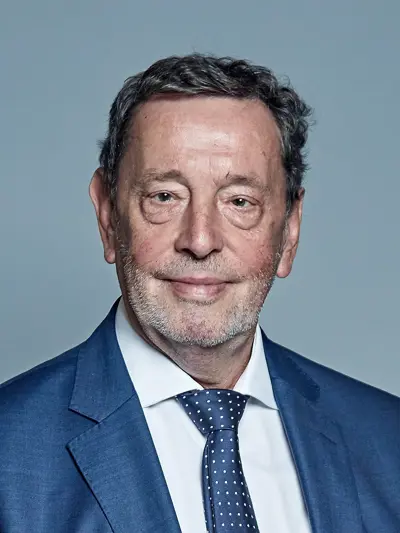
David Blunkett, Baron Blunkett, PC is a British politician, now in the House of Lords, who was MP for the Sheffield Brightside and Hillsborough constituency for 28 years until the 2015 general election, when he stood down. Blind since birth, and coming from a poor family in one of Sheffield's most deprived districts, he rose to become Education and Employment Secretary, Home Secretary and Work and Pensions Secretary in Tony Blair's Cabinet following Labour's victory in the 1997 general election.
