Charles R. Van Hise Quotes
I am just as anxious as Mr. Brandeis can be, to have trade regulated by competition as far as possible; but as a matter of fact, competition has broken down hopelessly in this country to adequately control prices, to adequately control quality, and we all know it… it is the theory regarding competition that it will regulate prices and quality; that it will give us reasonable prices and superior quality. That is a beautiful theory. But if this theory has ever corresponded to the facts in the past (and this I doubt) we may be sure that in the future it will never again do so.
Brandeis was U. S. Supreme Court Justice Louis D. Brandeis, 1856-1941, who wrote that competition would control prices if only healthy competition could be maintained—the problem was resolved by both increasing competition and much more stringent regulation of corporations.
Charles R. Van Hise, 1857-1918, President of the University of Wisconsin, Speech, Twenty-First Meeting of the Economic Club of New York, November 1, 1912
Sourced by: Eigen's Political and Historical Quotations

Collection of Spoken Words of the Prophet. Ironically, despite the reverence with which words of the Hadith are accorded in Islam, from time to time Muslim theologians and authorities have attempted to establish “fair prices” despite this free market view of the Prophet.


Hoover was the Food Administrator at that time. Although he gave lip service to the free market economy concept, he was proposing government price controls and rationing. When the free market was not functioning, at this time in his career, he was willing to use government controls and regulation. By the end of 1918 over 250,000 food-handling corporations, firms, and individuals were under Food Administration licenses. Meat, fish, poultry, eggs, butter, milk, potatoes, fresh and dried vegetables, and fruits, canned goods, the coarse grains and rice, vegetable oils, coffee, and such various commodities accessory to food-handling, as ice, ammonia (for ice-making), arsenic (for insecticides), jute bags, sisal, etc., were under direct control. Ironically, later when he was President and faced with the Great Depression, he had become much more rigid and would not “interfere” with the free, private market and use government to solve the national problems. It was Franklin Delano Roosevelt who did that after Hoover would not. At the time he gave this speech, Hoover was not very political and was more of a technocrat. It may have been that by the time he became President he was intellectually and politically locked in to Republican Party conservative economic ideology.

Whenever price controls have been tried, there always seems to develop a black market. However, some argue that price controls can work very well for a modest period of time in a national emergency and give WWII as an example. Although there was a black market, very few Americans participated in it, and the effect was positive as a result of the patriotism that was so keenly felt by most Americans at that time. Further, capital punishment has rarely worked to prevent any illegal activity. In London, pickpockets were publicly hung while other pickpockets fleeced the crowd watching the hanging ostensibly to dissuade people from pickpocketing.

She was then the European Commissioner for Competition


Shortly thereafter, India started to reduce the protectionism.


Manava Dharma Shastra. Ancient Hindu India had what may well have been the most regulated mercantile economy of any society in history. All prices for all goods were to be set by the king. In order to prevent the stultifying effect of price controls, the Hindus required that the prices be reset very frequently to reflect various market conditions. It was a highly regulated form of capitalism. This text is a part of the Hindu Holy Texts. Hindus believe that Manu was a prophet whose text is revealed or inspired.

To the modern reader utterances such as this from a Conservative Prime Minister seem astounding. However, the Great Depression existed in Canada as well as the United States, and Franklin Delano Roosevelt was not the only world leader who would reach the conclusion that business and capitalism must be profoundly regulated and the system changed if it was to be saved.

A justification of some mergers that would lessen competition was that the consumer would not be harmed as the merger will produce cost savings that could be passed on to the consumers. However, others argued that if the competition were reduced there would be no pressure on the merged companies to pass any savings along to the consumer. However, in this opinion, Justice Douglas set forth a basic principle of regulatory law: Even though the merger might have some consumer benefits, that is still no justification for doing.
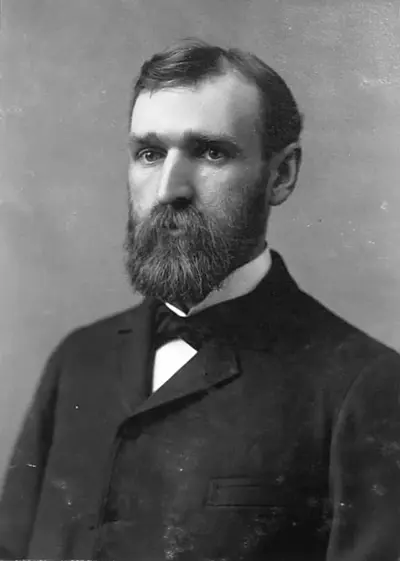
Charles Richard Van Hise was an American geologist, academic and progressive. He served as president of the University of Wisconsin (UW) in Madison, Wisconsin, from 1903 to 1918.
