Robert Zubrin Quotes
When the government mandates that everyone must buy a product, its sellers can, and will, increase its price, potentially without limit.
Zubrin, Robert. "The Real Cost of Obamacare." National Review, 2013.


Brandeis was U. S. Supreme Court Justice Louis D. Brandeis, 1856-1941, who wrote that competition would control prices if only healthy competition could be maintained—the problem was resolved by both increasing competition and much more stringent regulation of corporations.


The Black Plague, which raged in Europe from 1347 to 1349, had left relatively few able bodied people alive. Given this shortage of labor there was a rapid inflation, especially to the distress of the landed class who had to pay much more for their food. The king therefore established what amounted to price controls, wage controls and forces labor. See {611125} and {611126}


This would seem a much easier solution to the problem of monopoly holders charging outrageous prices than trying to fix profits or lay a large tax on the profits. However, few governments ever do this. In many cases the patent holders control or heavily influence the government. There is in addition, in most Judeo-Christian societies an assumption that most people have a moral sense and will not take undue advantage of customers just because they have the power to do so. And in the most egregious cases of monopoly pricing there were many other patents where the inventors were not gouging the consumers. It is always been the minority of businesses that have taken gross advantage of patent monopolies. However at some periods, where there was an oligarchy, all the companies in an area abused their patent monopolies together. An example would be the pharmaceutical industry of the early 21st century.


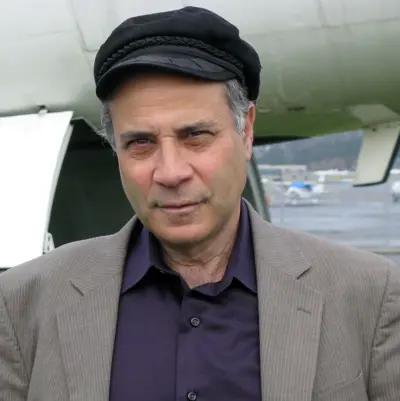
Robert Zubrin is an American aerospace engineer, author, and advocate for human exploration of Mars. He and his colleague at Martin Marietta, David Baker, were the driving force behind Mars Direct, a proposal in a 1990 research paper intended to produce significant reductions in the cost and complexity of such a mission. The key idea was to use the Martian atmosphere to produce oxygen, water, and rocket propellant for the surface stay and return journey. A modified version of the plan was subsequently adopted by NASA as their "design reference mission". He questions the delay and cost-to-benefit ratio of first establishing a base or outpost on an asteroid or another Apollo program-like return to the Moon, as neither would be able to provide all of its own oxygen, water, or energy; these resources are producible on Mars, and he expects people would be there thereafter.
