Sayyid Qutb Quotes
If you want Islam to be an agent of salvation, you must rule….. Islam has come to govern and run life in a proper fashion …. Islam without government and a Moslem nation without Islam are meaningless.
Sayyid Qutb, 1906-1966, Egyptian Salafi Philosopher and Writer (Moslem Brotherhood), The Battle Between Islam and Capitalism
Sourced by: Eigen's Political and Historical Quotations

Gabriel exaggerates in the sense that while the quotation is correct for many Muslims, it is by no means true of all. Iran for example is an Islamic theocracy, but Turkey is a 99 percent Muslim nation which is totally secular and in some ways is much more restrictive of Islamic teaching and practice than most secular democracies. The fundamentalist Muslim view of the state and religion is essentially the same as the ultra orthodox Jews and Christians. It is true that a greater proportion of Muslims believe in the merging of civil and religious law than Jews and Christians, but by no means all. The non Arab Muslims are much less likely to see the unity of state and religion.


Here Khomeini takes the classic Islamic view of the Koran that leaders should be obeyed unless they do not follow Islam. To the leaders of Islamic nations, this means that even if the state is not a theocracy, the Muslim clergy has the final say as to whether a ruler may justly remain in power since they are the ones who determine if a ruler is properly following Islam.
The notion that Islam would be practiced by individuals was in the Ayatollah’s view insufficient. Islam must also control the government—the head.


Theological & Legal Expert. The Sunnah, like the Koran, has statements of the Prophet, Mohammad. A fatwa is a religious legal ruling. This particular Fatwa shows the great difference between the Islamic State and a Republic or Democracy. In the latter forms, any religious practices must be consistent with the Constitution. Even though blasphemy might be prohibited by a religion, the United States Constitution for example protects anyone’s right to be blasphemous. In the Islamic system any constitution or law is subservient to and must be consistent with, the sayings of the Prophet Muhammad. In that sense, unless the Muslim populated nation is secular like Turkey, then the governments are partial or total theocracies.

This quotation helps to explain the religious revelry in military achievements in Islam.
This quotation illustrates one interesting difference between Muslim fundamentalists and the Jewish and Christian fundamentalists. All three insist that whenever the world of God has appeared in holy scripture, it must be followed and not be eroded by time and modernity. However, the Islamic fundamentalists also believe that no other laws, regulations or norms are needed to cope with change and modernity while the fundamentalist Christians and Jews do allow for additional legislation to govern areas on which holy scripture is silent.


While the author represents the views of most Islamic Fundamentalists, a similar view is held by many ulta-orthodox Jews and fundamentalist Christians also.

This principle explains why so many Islamic governments are monarchies and dictatorships. Islamic legitimacy requires the ruler to be sure that the society functions according to Sharia (Islamic Law). It is better if the ruler is selected by the senior and responsible members of society but that is not required. He could be a king or a dictator. And it is irrelevant how he comes to power under this interpretation so long as he rules following Islamic law. Saudi Arabia is an excellent example of a dictatorial monarchy which is considered legitimate since it follows Islamic law. Some modern Muslims do not support this traditional view and believe that a legitimate ruler must be selected by the will of the people.
The doctor argues that the problem of public health in the Islamic world is in large part due to the fact that health care is not organized any more under the control and governance of an Islamic institution—one which is guided by the Koran and Islamic tradition. Other physicians and public health experts believe one central obstacle to public health in Muslim nations is the strong influence that the Mullahs have over the behavior of the population and the medical and health practices that are acceptable and desirable to them are those of the Arabian Desert of the 7th Century or in some more modern interpretations, the medicine of the Islamic world of the 12th century when Islamic Medicine was the best in the World.

Perhaps this quotation gives the best insight to the major difference between an Islamic perspective of law and the Western. The latter places the rights of the individual on a par with or even superior to that of the society as a whole. The former is more concerned with the effect and result on society as a whole than concern with the individual rights of single individuals.

Some people read this part of the declaration as saying that if Muslims are in the majority and control the nation, there is no problem with violence. But if the Muslims are in the minority, they will likely be violent. Needless to say, this alarms most Western nations.
This is the philosophical root of Islamic Fundamentalist terrorism. If this principle is accepted, then it is very easy to rationalize anything to change a situation where Islam and Islamic law does not control anywhere
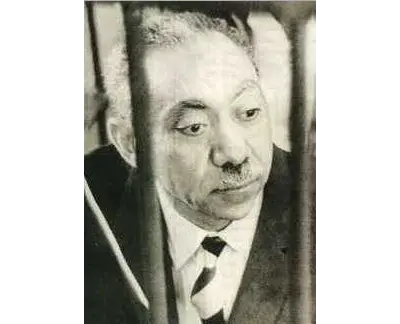
Sayyid Ibrahim Husayn Shadhili Qutb, known popularly as Sayyid Qutb, was an Egyptian author, educator, revolutionary, Jihadist ideologue, poet, and a leading member of the Egyptian Muslim Brotherhood in the 1950s and 1960s. In 1966, he was convicted of plotting the assassination of Egyptian President Gamal Abdel Nasser and was executed by hanging. Sayyid Qutb is considered as "the Father of Salafi-Jihadism", the religio-political doctrine that underpins the ideological roots of Global Jihadist organisations such as Al Qaeda and Daesh.
