Alija Izetbegovic Quotes
The Islamic order can only be established in countries where Muslims represent the majority of the population. If this is not the case, the Islamic order is reduced to mere power (as the other element -- an Islamic society -- is missing) and may turn to violence
Some people read this part of the declaration as saying that if Muslims are in the majority and control the nation, there is no problem with violence. But if the Muslims are in the minority, they will likely be violent. Needless to say, this alarms most Western nations.
Alija Izetbegovic, 1925–2003, President of Bosnia and Herzegovina, The Islamic Declaration, 1970
Sourced by: Eigen's Political and Historical Quotations


This quotation helps to explain the religious revelry in military achievements in Islam.
The place of non-Muslims in an Islamic country, if any, has been a point of great anxiety among Christians, Jews, Bhais, and others. These have been persecuted and expelled from numerous Islamic countries while in others such as modern Turkey there is no problem. This particular cleric is seen as more “modern” and “liberal” than most. Even he has little concept of equality and freedom of religion.

Vladimir Lenin

The notion that Islam would be practiced by individuals was in the Ayatollah’s view insufficient. Islam must also control the government—the head.


Under his leadership most of the Muslims did not accept such a constitution. Partition ensued and with it came the deaths of tens of millions of Indians but Pakistan and Bangladesh were formed. Ironically, there are now about 200 million Muslims in India living under a “Hindu Majority Government” –more than in any country except Indonesia. Few Indian Muslims leave India for Pakistan today.

Gabriel exaggerates in the sense that while the quotation is correct for many Muslims, it is by no means true of all. Iran for example is an Islamic theocracy, but Turkey is a 99 percent Muslim nation which is totally secular and in some ways is much more restrictive of Islamic teaching and practice than most secular democracies. The fundamentalist Muslim view of the state and religion is essentially the same as the ultra orthodox Jews and Christians. It is true that a greater proportion of Muslims believe in the merging of civil and religious law than Jews and Christians, but by no means all. The non Arab Muslims are much less likely to see the unity of state and religion.


The Muslim Brotherhood had won the Presidency in the first Egyptian democratic election shortly after the ouster of Mubarak when they were the only party that was organized. However, after one year of government, their performance was so bad that critics like El Baradei offered strong public criticism—especially of the preoccupation with Islam with little government attention given to freedom, human rights, and the economy which was in terrible shape. This was the focus of the pointed article title. A few days after this article was published there was an insurrection of huge crowds of Egyptians and the Muslim Brotherhood President Morsi was forced to resign.


This was a document prepared by the Caliph and presented to Christians in Syria to sign if they wanted peace and to be free from assault in Islamic lands. For centuries thereafter these, and variations of them, were conditions imposed on Christians and Jews in Islam lands. Some of these can be recognized as variants of conditions that American and other coalition troops were required to adhere to in Saudi Arabia during the Gulf War. By today’s standards this was highly discriminatory and a gross imposition on a minority. However at the time, this was one of the more liberal doctrines. Jews and Christians otherwise could live in Muslim lands, practice their religion, work there, live where they would, acquire property, practice professions, and even achieve high office. Jews and Christians rose to the highest ranks of Islamic government administrators including Prime Ministries. Their persons were safe from assault and derisions all provided they followed the Pact of Umar or its current version. In contrast Jewish and Muslim minorities in Christian nations were treated much more harshly. They could practice only a few occupation, were constantly under physical attack, were forced to live in ghettos, had their property seized, and in many cases were tortured and killed.

Perhaps this quotation gives the best insight to the major difference between an Islamic perspective of law and the Western. The latter places the rights of the individual on a par with or even superior to that of the society as a whole. The former is more concerned with the effect and result on society as a whole than concern with the individual rights of single individuals.

She was born a Muslim herself and her life has been threatened by other, Muslims who are fundamentalists who are living proof or her point.

This is an interesting quotation because it illustrates the antipathy that Sunni Muslims hold towards Shiites and their concept of the problems of democracy. While most fundamentalist Muslims oppose democracy in principle, others, not wanting to oppose majority rule outright, have used the rationale in Iraq that the Shiites are not in the majority in the country, and that the Sunnis who controlled Iraq for so many years are the rightful rulers.

The Prince had given $20 million to American Universities to establish Islamic Studies programs however. The Muslim religion requires believers to proselytize and spread the faith, while Saudi and Islamic law prohibits any other faith from being public or promoted. It is illegal, for example, to even bring a Christian Bible into the Kingdom. During the Gulf War, American soldiers defending Saudi Arabia were not allowed to bring in their religious texts unless they were Muslims.
The last Caliph of the Muslims was removed in 1924 as part of the Turkish Reform. The position has had attraction for many Muslim leaders who saw themselves in the role, but since 1924, nationalism and modernism and the lack of an effective international Muslim leader has precluded it.
Despite the fact that the statues were holy symbols to Buddhists, they were offensive to Muslims who say statues as “graven images” prohibited by the Koran. See Wakil Ahmad Muttawakil {608419} and Jamal’s other quotation {604665}.
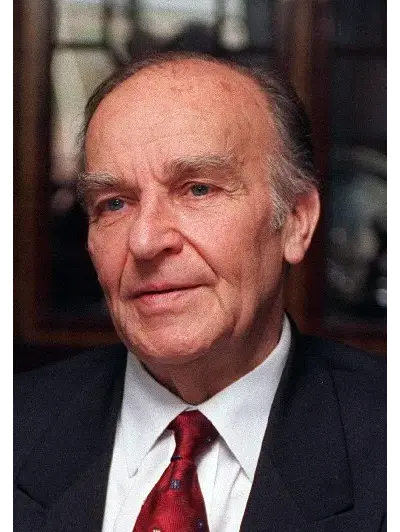
Alija Izetbegović was a Bosnian politician, lawyer, Islamic philosopher and author, who in 1992 became the first president of the Presidency of the newly independent Republic of Bosnia and Herzegovina. He served in this role until 1996, when he became a member of the Presidency of Bosnia and Herzegovina, serving until 2000.
