Mohamed ElBaradei Quotes
You Can’t Eat Sharia
The Muslim Brotherhood had won the Presidency in the first Egyptian democratic election shortly after the ouster of Mubarak when they were the only party that was organized. However, after one year of government, their performance was so bad that critics like El Baradei offered strong public criticism—especially of the preoccupation with Islam with little government attention given to freedom, human rights, and the economy which was in terrible shape. This was the focus of the pointed article title. A few days after this article was published there was an insurrection of huge crowds of Egyptians and the Muslim Brotherhood President Morsi was forced to resign.
Mohamed El Baradei, Egyptian Diplomat & Nobel Peace Prize Winner, Director General of the International Atomic Energy Agency, Leader, Egyptian Constitutional Party, Title of Article, “You Can’t Eat Sharia”, Foreign Policy, July / August 2013
Sourced by: Eigen's Political and Historical Quotations


Muslims are divided about the role of the Islamic religious courts. Some believed that these should be the only courts and should govern all law, religious and civil on the grounds that there are no real differences in Islam. Others believe, as Jammal put forth, that religious courts should only deal with religious and personal matters. Still others believe that these is no place in modern society for religious courts. This debate echoes the debate that took place in Christianity and Judaism, but the vast majority of these have concluded that there is no place for religious courts
Theological & Legal Expert. A fatwa is a religious legal ruling. The frequent problem of Muslim men who marry American women, and if there is a divorce, the man kidnaps the child and returns to an Islamic country where the wife never gets to see the children causes a very difficult problem for American diplomats because even though there is an American court decision against the father, the very act of taking a custody dispute to a civil court contravenes Islamic law so there will be no extradition as the Islamic country takes the position that there was never an original legitimate court decision.

The notion that Islam would be practiced by individuals was in the Ayatollah’s view insufficient. Islam must also control the government—the head.

Gabriel exaggerates in the sense that while the quotation is correct for many Muslims, it is by no means true of all. Iran for example is an Islamic theocracy, but Turkey is a 99 percent Muslim nation which is totally secular and in some ways is much more restrictive of Islamic teaching and practice than most secular democracies. The fundamentalist Muslim view of the state and religion is essentially the same as the ultra orthodox Jews and Christians. It is true that a greater proportion of Muslims believe in the merging of civil and religious law than Jews and Christians, but by no means all. The non Arab Muslims are much less likely to see the unity of state and religion.

While the author represents the views of most Islamic Fundamentalists, a similar view is held by many ulta-orthodox Jews and fundamentalist Christians also.


Some people read this part of the declaration as saying that if Muslims are in the majority and control the nation, there is no problem with violence. But if the Muslims are in the minority, they will likely be violent. Needless to say, this alarms most Western nations.
This principle explains why so many Islamic governments are monarchies and dictatorships. Islamic legitimacy requires the ruler to be sure that the society functions according to Sharia (Islamic Law). It is better if the ruler is selected by the senior and responsible members of society but that is not required. He could be a king or a dictator. And it is irrelevant how he comes to power under this interpretation so long as he rules following Islamic law. Saudi Arabia is an excellent example of a dictatorial monarchy which is considered legitimate since it follows Islamic law. Some modern Muslims do not support this traditional view and believe that a legitimate ruler must be selected by the will of the people.
The doctor argues that the problem of public health in the Islamic world is in large part due to the fact that health care is not organized any more under the control and governance of an Islamic institution—one which is guided by the Koran and Islamic tradition. Other physicians and public health experts believe one central obstacle to public health in Muslim nations is the strong influence that the Mullahs have over the behavior of the population and the medical and health practices that are acceptable and desirable to them are those of the Arabian Desert of the 7th Century or in some more modern interpretations, the medicine of the Islamic world of the 12th century when Islamic Medicine was the best in the World.

Perhaps this quotation gives the best insight to the major difference between an Islamic perspective of law and the Western. The latter places the rights of the individual on a par with or even superior to that of the society as a whole. The former is more concerned with the effect and result on society as a whole than concern with the individual rights of single individuals.
Religious obligation of Islam requires all Muslims to try and convert all others. However that is not different from some of the Christian, fundamentalist religions where attempted conversion of non-believers is a duty. However, where many in the Islamic world see that obligation as a peaceful, nonviolent, effort to persuade others to accept Islam, there are many others who believe that Jihad should impose Islamic law—Sharia—upon the world and the use of force and violence is not only acceptable but is necessary and desirable to achieve their objection.
All modern legal systems conflict in some respects with a literal interpretation of the Koran which is the basis for the traditionalists view of Sharia—Islamic law. Therefore a student of modern law is learning things which go against Sharia as interpreted by fundamentalists. There was a time when Jewish and Christian American religious families were uncomfortable with studding modern law as there were contradictions with Biblical law. There are still a few.
A fatwa is a religious legal ruling.
Theological & Legal Expert. The Sunnah, like the Koran, has statements of the Prophet, Mohammad. A fatwa is a religious legal ruling. This particular Fatwa shows the great difference between the Islamic State and a Republic or Democracy. In the latter forms, any religious practices must be consistent with the Constitution. Even though blasphemy might be prohibited by a religion, the United States Constitution for example protects anyone’s right to be blasphemous. In the Islamic system any constitution or law is subservient to and must be consistent with, the sayings of the Prophet Muhammad. In that sense, unless the Muslim populated nation is secular like Turkey, then the governments are partial or total theocracies.

In September of 2005 a Danish Newspaper published some political cartoons showing the hypocrisy of some Muslims who use Islam to justify murder of innocents and terrorism. Months later, in January of 2006 many in the Middle East protested vehemently and Muslim riots broke out because the Prophet Muhammad's visage was depicted against Islamic tradition. Many Muslim nations started a boycott against Denmark. Many Muslim leaders claimed that insulting religion was an “abuse” of freedom of speech including those from nations which regularly publish material that is virulent against Christians and Jews. The Sheikh along with many other Muslims called for the death penalty for the cartoonist who was exercising his Danish right of freedom of expression.
The last Caliph of the Muslims was removed in 1924 as part of the Turkish Reform. The position has had attraction for many Muslim leaders who saw themselves in the role, but since 1924, nationalism and modernism and the lack of an effective international Muslim leader has precluded it. This anti-revolutionary sentiment of the Islamic political state that is so traditional, may in part account for the Islamic tolerance of autocratic regimes. Note that the distinction between religious responsibilities and civil are important. Tyranny must be tolerated but not blasphemy or heresy. Traditional Muslims provide more tolerance and forbearance for a leader’s civil failings than religious. But Muslims were not the only people to do this. A British prime minister had a view with the same conservative logic. See {639130}. The ancient Jewish Macabean revolt against the Jewish king was all based on failure to perform required religious duties of sacrifice as opposed to tyranny and poor government which also existed. Popes excommunicated Kings for religious reasons, not because of their civil failures at governing. Holding rulers accountable for civil performance is a relatively new concept yet is indispensible in a modern democracy.
The last Caliph of the Muslims was removed in 1924 as part of the Turkish Reform. The position has had attraction for many Muslim leaders who saw themselves in the role, but since 1924, nationalism and modernism and the lack of an effective international Muslim leader has precluded it.
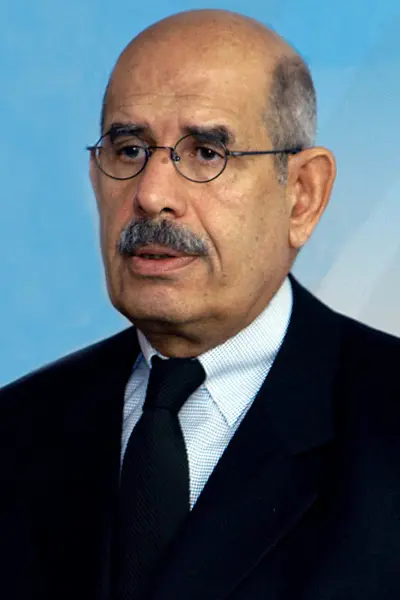
Mohamed Mustafa ElBaradei is an Egyptian law scholar and diplomat who served as Vice President of Egypt on an interim basis from 14 July 2013 until his resignation on 14 August 2013.
