Shibley Telhami Quotes
Morsi and the Muslim Brotherhood overestimated the extent to which Egyptians identify with Islam. And now, with their violent repression of the Brotherhood, the generals who ousted Morsi risk underestimating it.
Shibley Telhami, Middle East Academic Expert, Political Scientist & Pollster “In Egypt, a War Over Identity”, The Washington Post, August 18, 2013
Sourced by: Eigen's Political and Historical Quotations


There were many who disagreed about the commitment to non violence. For example, they advocate Sharia (Islamic) fundamentalist law where a Muslim who converts to another religion is executed and adulterers are stoned to death. So their ends are very violent and intolerant. In the past they have espoused and committed violence as a means. Many believe that recent claims of non violent means are just tactical deceptions which are authorized as a methodology in the Koran.

El Baradei resigned when he made this statement. After the Arab Spring revolution, Mohammed Morsi had been elected President by a bare 51 pecent of the vote. However, he was a member of the political wing of the Muslim Brotherhood, an international terrorist organization which advocates Islamic Sharia and Theocracy. He began sizing powers and his government passed a constitution that did not guarantee basic human rights and moved towards a theocracy. Then he eliminated the checks and balances and the public finally revolted bringing 20 million Egyptians into the street in protest. A civil war was eminent and the military stepped in and forced Morsi to resign.
This statement was made 20 years before the Arab Spring of 2011.
The Muslim Brotherhood had won the Presidency in the first Egyptian democratic election shortly after the ouster of Mubarak when they were the only party that was organized. However, after one year of government, their performance was so bad that critics like El Baradei offered strong public criticism—especially of the preoccupation with Islam with little government attention given to freedom, human rights, and the economy which was in terrible shape. This was the focus of the pointed article title. A few days after this article was published there was an insurrection of huge crowds of Egyptians and the Muslim Brotherhood President Morsi was forced to resign.


The key security organizations of the Pakistan government had large numbers of radical Islamicists with great sympathy and close ties with the Islamic terrorists.
This quotation is used by the moderate Egyptians and other moderate Arab leaders as well as Israelis and other experts in combating Islamic Fundamentalism to illustrate the thinking process of the Muslim fundamentalist terrorist leader. They are more than willing to sacrifice those they lead (though rarely themselves) if they think that something is to be gained. But if there is nothing to be gained, their “moral” responsibility requires not “wasting” their followers’ lives. Therefore, the way these experts believe they should deal with the radicals is to face them with overwhelming force (a variant of the Powell Doctrine) and never concede anything or let them gain anything from violence. A single concession makes the terrorism, sacrifice and violence worthwhile, but if there is no gain, the leader has wasted the lives of his followers and is less likely to initiate another attack.

Egypt, after is Arab Spring ousting of it like time military dictator, suffered through and Islamic government regeime, but after that ended up electing a military strongman again who had little inclination towards democracy and was decidedly fascistic. In November 2013, the Robert F. Kennedy Center for Justice and Human Rights presented Omran with an award to honor her work and commitment to human rights in Egypt.


If some Islamic cleric declares a war or dispute to be an attack on Islam, the penalty is indeed severe for those Muslims who do not join the fight. In some Islamic lands, unbelievers are put to death. Note that the children become the Islamic society’s hostages for the behavior of the father.
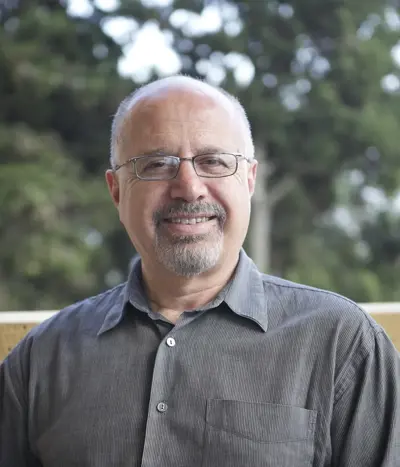
Shibley Telhami is a Palestinian-American Professor in the Department of Government and Politics at the University of Maryland, College Park, and a nonresident senior fellow of the Center for Middle East Policy at the Brookings Institution.
