Lajos Kossuth Quotes
All for the People and All by the People; Nothing About the People Without the People - That is Democracy!
Some people think that this quotation was partially copied from Lincoln’s Gettysburg Address. However, he gave this speech more than a decade earlier. Lincoln might have been familiar with it. His statue is in the U. S. Capitol.
Lajos Kossuth, 1802-1894, Hungarian Politician, Father of Hungarian Democracy, Address to the Ohio State Legislature, February 16, 1852
Sourced by: Eigen's Political and Historical Quotations

This appears to be the earliest use of the phrase Lincoln later made famous in the Gettysburg Address.

The government relationship to people phrase, although probably Lincoln's most famous, was not totally original. John Adams came close in a 1774 proclamation. As did John Marshall in his McCulloch v. Maryland decision. Daniel Webster's Speech on Foot's Resolution was very close. as was Theodore Parker in 1850 {629578}. There was also Thomas Cooper in 1795. But the earliest appears to be John Wycliffe in 1382 {567292}. It is not known with which of these Lincoln was familiar.


This quotation had a close proximity to Lincoln’s Gettysburg Address (see linked quote). Although this was probably Lincoln's most famous line, it was not totally original. John Adams came close in a 1774 proclamation (see linked quote). As did John Marshall in his McCulloch v. Maryland decision (see linked quote). There was also Thomas Cooper in 1795 (see linked quote). But the earliest close phrase use appears to be the English cleric, John Wycliffe, in 1382 (see linked quote). It is not known with which of these Lincoln was familiar.


This constitution, 13 years later, became the basis for the national Batavian Constitution.

This is a very important quotation. Abraham Lincoln obtained a printed copy of Parker’s sermon and underlined this quotation on his copy. Later when he was President he used a slight variation of Parker’s last phrase in the last line of his famous Gettysburg Address.


Note the similarity to Lincoln who Ataturk very much admired.


This was his version of the governing body of a republican commonwealth. His assumption was that the ablest men would be the nobility, the educated and religious (Catholic) elite.


the power a ruler or a ruling class

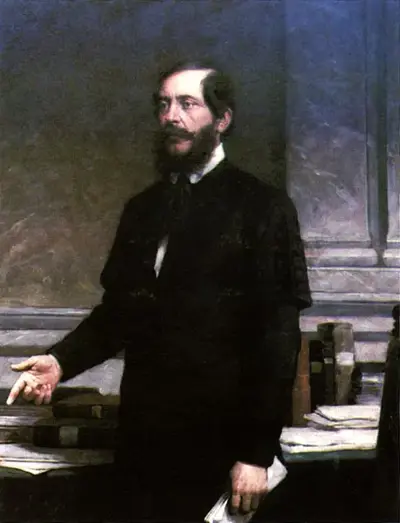
Lajos Kossuth de Udvard et Kossuthfalva was a Hungarian nobleman, lawyer, journalist, politician, statesman and Governor-President of the Kingdom of Hungary during the revolution of 1848–49.
