Ralph Bunche Quotes
The voice of the people must be heeded.
Ralph Bunchee, 1904-1971, U. N. Undersecretary General, Nobel Laureate in Peace
Sourced by: Eigen's Political and Historical Quotations


The State Constitutional ratification convention for Constitutional amendments is


This constitution, 13 years later, became the basis for the national Batavian Constitution.


See Walter Reynolds {32317} for a later English version. Also, Alcuin of York {593018} and William Tecumseh Sherman for an opposite view using a similar phrase. Hesiod's seems to be the earliest version of this idea that is with us today.


The speech was never actually delivered, but instead the Bishop published it. It received wide distribution including in America where it was published by the Maryland Gazette on September 29, 1774.

Some people think that this quotation was partially copied from Lincoln’s Gettysburg Address. However, he gave this speech more than a decade earlier. Lincoln might have been familiar with it. His statue is in the U. S. Capitol.


the power a ruler or a ruling class


At the time the power and prestige of Congress relative to the Presidency , was much greater than it is today. It was McKinley’s successor, Theodore Roosevelt, who began a 20th century trend which led to a reversal of the relationship between the Executive Branch and the Legislative.


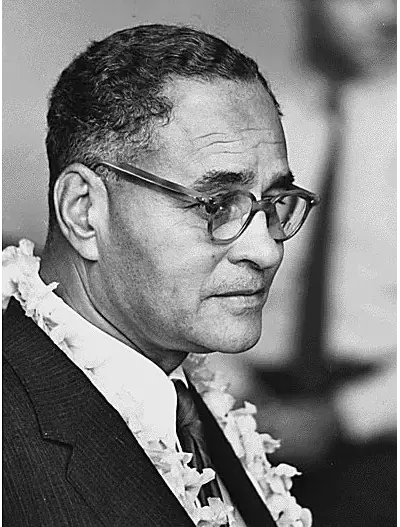
Ralph Johnson Bunche was an American political scientist, diplomat, and leading actor in the mid-20th Century decolonization process and US civil rights movement, who received the 1950 Nobel Peace Prize for his late 1940s mediation in Israel. In the List of black Nobel laureates he is the first African American and first person of African descent to be awarded a Nobel Prize. He was involved in the formation and administration of the United Nations and played a major role in both the decolonization process and numerous peacekeeping operations sponsored by the UN. In 1963, he was awarded the Presidential Medal of Freedom by President John F. Kennedy. At the UN, Bunche gained such fame that Ebony magazine proclaimed him perhaps the most influential African American of the first half of the 20th Century and "[f]or nearly a decade, he was the most celebrated African American of his time both [in the US] and abroad."
