Jonathan Shipley Quotes
The people are certainly the best judges whether they are well governed.
The speech was never actually delivered, but instead the Bishop published it. It received wide distribution including in America where it was published by the Maryland Gazette on September 29, 1774.
Jonathan Shipley, 1714-1788, English Protestant Bishop, Member of the House of Lords, Speech Prepared for Delivery in the House of Lords, 1774
Sourced by: Eigen's Political and Historical Quotations


For that, the Church burned him at the stake. Note the phraseology and compare it to Gettysburg Address {458852}. It is not known whether Lincoln was aware of this quotation or others that used similar wording.


The government relationship to people phrase, although probably Lincoln's most famous, was not totally original. John Adams came close in a 1774 proclamation. As did John Marshall in his McCulloch v. Maryland decision. Daniel Webster's Speech on Foot's Resolution was very close. as was Theodore Parker in 1850 {629578}. There was also Thomas Cooper in 1795. But the earliest appears to be John Wycliffe in 1382 {567292}. It is not known with which of these Lincoln was familiar.

Originally it was published in Boston under the name “A Columbian Patriot.” The “principles to which she referred were the principles set out in our Constitution of 1787.


See Walter Reynolds {32317} for a later English version. Also, Alcuin of York {593018} and William Tecumseh Sherman for an opposite view using a similar phrase. Hesiod's seems to be the earliest version of this idea that is with us today.

This constitution, 13 years later, became the basis for the national Batavian Constitution.


This phrase was coined by Meiklejohn

His faction won on the House and lost with respect to the Senate.


There is a certain redundancy in that “Fenian” means “Party.”


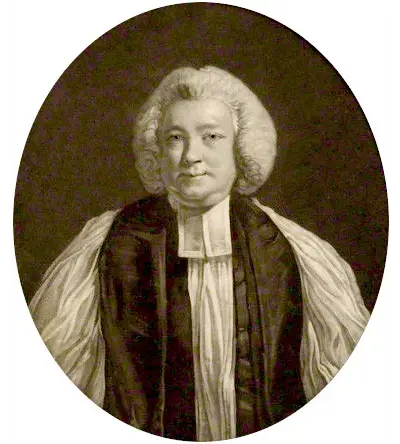
Jonathan Shipley was a clergyman who held offices in the Church of England (including Dean of Winchester from 1760 to 1769), who became Bishop of Llandaff from January to September 1769 and Bishop of St Asaph from September 1769 until his death.
