Gouverneur Morris Quotes
In England, a Majority of Citizens does not elect the Majority of Representatives.
Gouverneur Morris, 1752-1816, U. S. Commissioner to England & U. S. Minister to France, U. S. Senator (Federalist, NY), Political Enquiries, 1776
Sourced by: Eigen's Political and Historical Quotations


In the EU most of the government power is dominated by appointed elites and not elected representatives.

This was his version of the governing body of a republican commonwealth. His assumption was that the ablest men would be the nobility, the educated and religious (Catholic) elite.


Despite his warning---and that of others—all that they could get agreement upon had each of these three weaknesses. After winning the American Revolution, the new country found the Articles of Confederation and the Continental Congress completely inadequate and finally in 1787 there was a Constitutional Convention held in secret in Philadelphia to overcome the weaknesses of the existing structure of which the warnings of Rush were three of the problems that had to be fixed.


the power a ruler or a ruling class


A major problem of new and emerging democracies is that many people believe that majority rule per se is democracy. In Egypt for example, Morsi and his Muslim Brotherhood won the election. They then assumed that they had the right to do anything including exempting the government from judicial review or deciding the role of women in society or denying freedom of religion to non-Muslim citizens. Democracy is not a serial autocracy with each new autocrat being selected by a free and fair election.
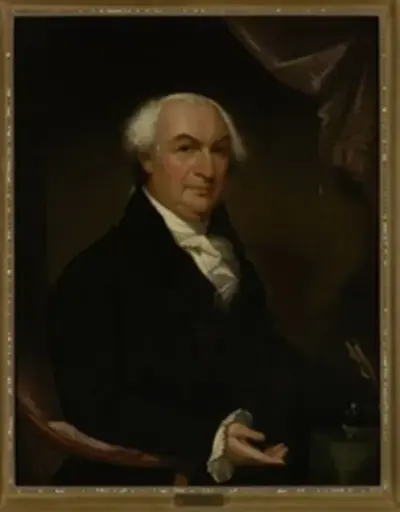
Gouverneur Morris was an American statesman, a Founding Father of the United States, and a signatory to the Articles of Confederation and the United States Constitution. He wrote the Preamble to the United States Constitution and has been called the "Penman of the Constitution." In an era when most Americans thought of themselves as citizens of their respective states, Morris advanced the idea of being a citizen of a single union of states. He was also one of the most outspoken opponents of slavery among all of those who were present at the Constitutional Convention. He represented New York in the United States Senate from 1800 to 1803.
