John Stuart Mill Quotes
In the United States, where the numerical majority have long been in full possession of collective despotism, they would probably be as unwilling to part with it as a single despot or an aristocracy.
John Stuart Mill, 1806-1873, Member of Parliament, British Political Economist, Representative Government, 1861
Sourced by: Eigen's Political and Historical Quotations

This quotation is historically important because Davis clearly states the reason for the rebellion of the South. The anti-slave states were growing at a greater rate than the slave states and despite the greater voting power that a southerner had (a result of the 3/5 count of slaves for census purposes, and the Senate), the handwriting was on the wall and the majority of the United States was against the vicious institution of slavery and would make it unprofitable, impossible and/or illegal in the coming years. Southern slavery advocates saw this as a “tyranny of the majority” and therefore took up arms. In the early 20th century, apologists for the Southern rebellion tried to promote the idea that there were reasons other than slavery, but this quotation and the resolutions of the states who withdrew from the Union make it clear that the right to maintain slavery was the only significant issue. In that sense it was a States’ Rights issue, but the South was opposed to States’ Rights when it came to States refusing to return fugitive slaves when Federal Law required such under the Dred Scott Supreme Court Decision.


1st Baron Macaulay


After the many years of the Cold War attacking of Democracy, for many Russians the word conveys a bad image of their old enemy. For others, using the word reminds them that the Soviet Union collapsed and the Russians lost the cold war—an unpleasant memory. Yet many of the leaders of the Russian Federation very much wanted to democratize Russia. Bushmin had this very practical, albeit humorous, solution.

A major problem of new and emerging democracies is that many people believe that majority rule per se is democracy. In Egypt for example, Morsi and his Muslim Brotherhood won the election. They then assumed that they had the right to do anything including exempting the government from judicial review or deciding the role of women in society or denying freedom of religion to non-Muslim citizens. Democracy is not a serial autocracy with each new autocrat being selected by a free and fair election.

Many disagree with Hook. While there are few total societies as examples, recently they point to Pakistan where the Islamic majority not only tyrannized non-Muslims, but even Muslims who are not devout enough. Hooks opponents argue that tyranny of the majority is generally exhibited in areas. For example, the white American majority tyrannized the Black minority for the first 150 years of American history. Within local and state governments there are many more examples of Tyranny of the Majority. The Mormons tyrannized non Mormons when they first settled the Utah territory. The Mormons themselves had been tyrannized by Christian majorities throughout their trek from New York State to Utah.


This quotation illustrates the "winner take all" conceopt of many political cultures that call themselves and think of theselves as a democracy. But a true democracy does not allow a tyranny of the majority--especially a very narrow minority.


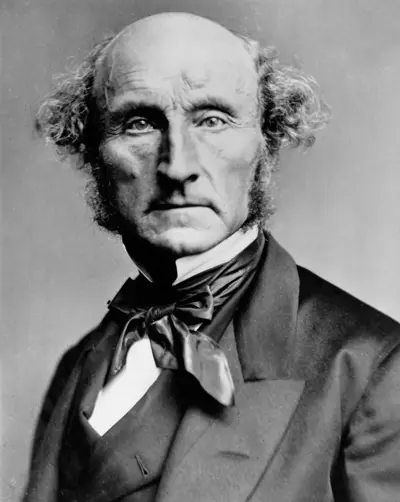
John Stuart Mill, usually cited as J. S. Mill, was an English philosopher, political economist, Member of Parliament, and civil servant. One of the most influential thinkers in the history of classical liberalism, he contributed widely to social theory, political theory, and political economy. Dubbed "the most influential English-speaking philosopher of the nineteenth century", he conceived of liberty as justifying the freedom of the individual in opposition to unlimited state and social control.
