William Pitt the Younger Quotes
The simple question is: will you change your Ministers and keep the Empire, or keep your Ministers and lose the Kingdom?
Elected at 24 as the youngest British Prime Minister. He was arguing for a motion of censure of the government of Lord North
William Pitt, 1759-1806, British Prime Minister, Speech in Parliament, March 15, 1782
Sourced by: Eigen's Political and Historical Quotations

This absolute ruler concluded that single person judgment with advisors has not as sound as a system of open discussion and institutions affecting policy decisions and administration. She herself had made errors and admitted it—see {641730}.


Churchill, out of power at that time, was outraged that the Labour government was about to grant India self-government and independence removing half of the British Empire which he revered. His passion for maintaining the empire was so extreme that it affected his usual great powers of political analysis and prediction. The Congress Party Leaders led India to become the largest democracy the world had ever known, and leaders like Nehru and Gandhi became almost as famous and remembered as was Churchill himself.


Adams was one of those who felt that the President and Vice President should have some Title of official respect like “Your Highness.” That was a very controversial issue at the time. See {586769}. However, most public opinion thought that was a throwback to monarchy. Adams was thereafter derided for being a monarchist.


1st Earl Baldwin of Bewdley. Queen Victoria's birthday


After the King’s appointment in 1921 she “advised” him on establishing this regime and operating the government. At a time that women could not even vote in England, Bell was a kingmaker and major power in an area of the world that was much more sexist than England at the time.


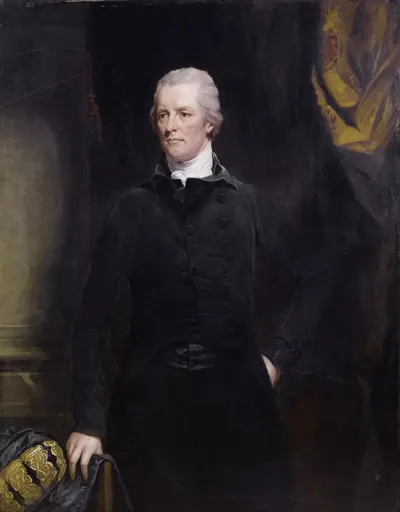
William Pitt the Younger was a prominent British Tory statesman of the late eighteenth and early nineteenth centuries. He became the youngest prime minister of Great Britain in 1783 at the age of 24 and the first prime minister of the United Kingdom of Great Britain and Ireland as of January 1801. He left office in March 1801, but served as prime minister again from 1804 until his death in 1806. He was also Chancellor of the Exchequer for all of his time as prime minister. He is known as "the Younger" to distinguish him from his father, William Pitt, 1st Earl of Chatham, who is customarily referred to as "William Pitt the Elder" (or less commonly, simply "Chatham") and had previously served as prime minister.
